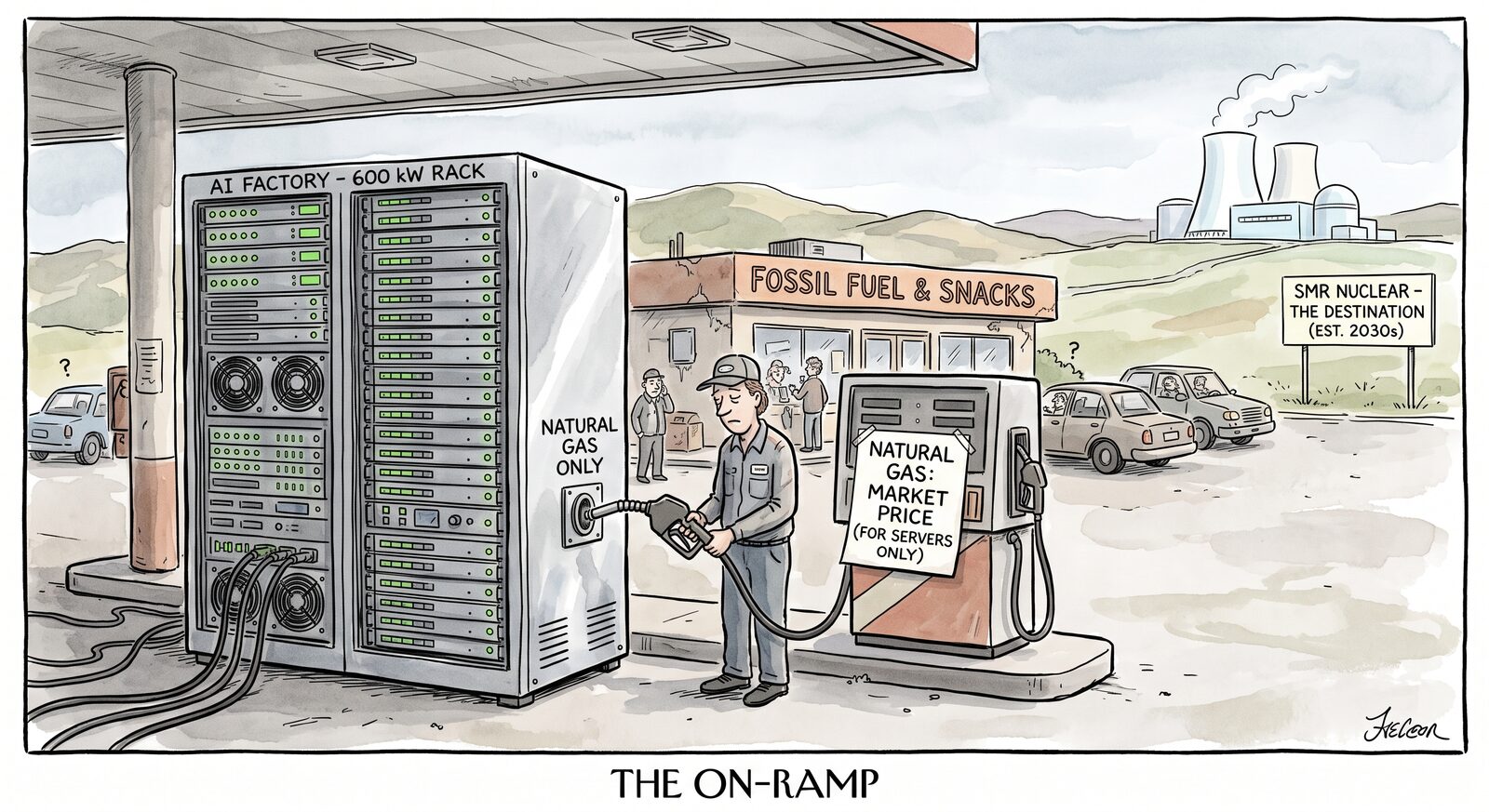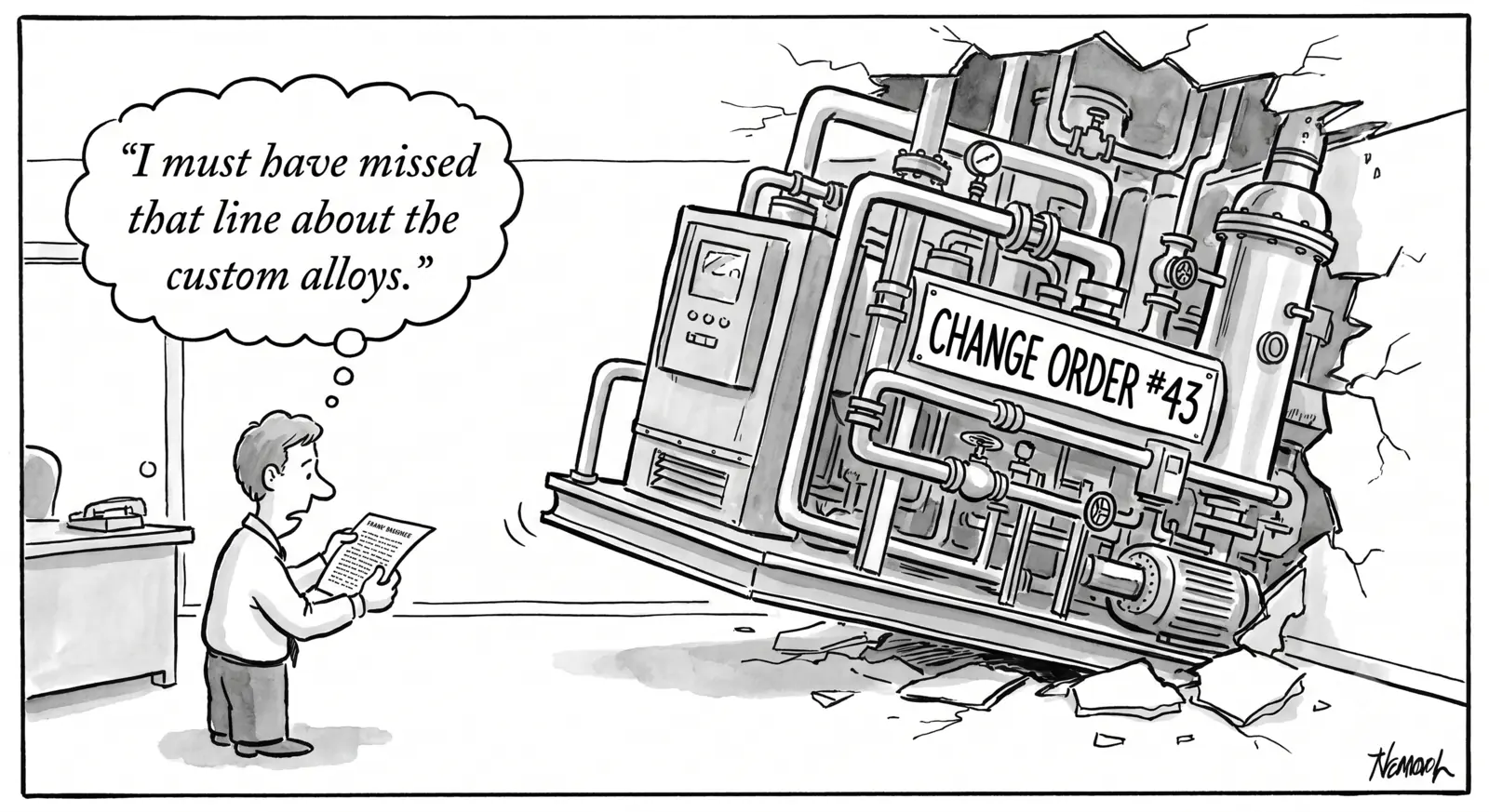
<?xml version="1.0" encoding="utf-8"?><feed xmlns="http://www.w3.org/2005/Atom" ><generator uri="https://jekyllrb.com/" version="4.3.4">Jekyll</generator><link href="https://teracontext.ai/feed.xml" rel="self" type="application/atom+xml" /><link href="https://teracontext.ai/" rel="alternate" type="text/html" /><updated>2026-04-01T20:25:35+00:00</updated><id>https://teracontext.ai/feed.xml</id><title type="html">TeraContext.AI</title><subtitle>AI-powered pre-construction platform for commercial construction. Upload spec books, classify against masterformat, generate scope packages, manage subcontractor bids, and assemble GC proposals.</subtitle><author><name>TeraContext.AI Team</name></author><entry><title type="html">Building for the Next GPU: What Vera Rubin Means for Data Center Construction</title><link href="https://teracontext.ai/blog/2026/03/30/building-for-the-next-gpu/" rel="alternate" type="text/html" title="Building for the Next GPU: What Vera Rubin Means for Data Center Construction" /><published>2026-03-30T00:00:00+00:00</published><updated>2026-03-30T00:00:00+00:00</updated><id>https://teracontext.ai/blog/2026/03/30/building-for-the-next-gpu</id><content type="html" xml:base="https://teracontext.ai/blog/2026/03/30/building-for-the-next-gpu/"><![CDATA[<p><img src="/images/building-for-next-gpu-cartoon.png" alt="Building for the Next GPU" /></p>

<p><em>You pivoted to data centers. Now the data centers are pivoting underneath you. The next GPU generation doubles the power, replaces air with pressurized water, and turns your structural assumptions upside down.</em></p>

<hr />

<h3 id="tldr-for-transitioning-gcs">TL;DR for Transitioning GCs</h3>

<p>If you’re a general contractor moving into data centers from office or multifamily — or even a conventional data center builder — here’s what you need to know about the next generation of AI facilities in 300 words:</p>

<p><strong>The buildings change completely.</strong> NVIDIA’s Vera Rubin GPU (shipping H2 2026) draws 190–230 kW per rack — nearly double the current Blackwell generation. Vera Rubin Ultra (2027) hits 600 kW per rack. Every rack is liquid-cooled. No air conditioning. Pressurized water/glycol piping runs to every cabinet in the building.</p>

<p><strong>Your structural scope gets heavier.</strong> Forget the 100 psf data center floor spec you’ve been hearing about. AI-dense liquid-cooled racks with Coolant Distribution Units push floor loads to 250–350 psf — manufacturing plant territory. You’re likely looking at steel beam and composite deck systems or thickened slabs with deep foundations, not the post-tensioned concrete slabs you pour for office towers. Microsoft’s Wisconsin AI facility drove 46.6 miles of deep foundation piles.</p>

<p><strong>Your mechanical subs change entirely.</strong> The HVAC guys who ran CRAC units in conventional data centers can’t build this. You need pipefitters and plumbers — the same trades that build LNG terminals and semiconductor fabs. The U.S. is projected to be short 550,000 plumbers by 2027, and those workers are simultaneously being pulled toward LNG, chip fabs, and now data center liquid cooling.</p>

<p><strong>Water leaks are catastrophic.</strong> A single cooling loop failure can destroy millions in GPU hardware. Downtime costs $5,000–$10,000 per minute. Every coupling needs leak detection sensors. Auto-shutoff within 60 seconds is non-negotiable. Your warranty liability is now equipment-focused — a leaked rack of Vera Rubin GPUs is worth more than an entire floor of office finishes.</p>

<p><strong>Your power scope explodes.</strong> Forget “utility feed plus diesel backup.” Vera Rubin-era facilities need 138–345kV transmission connections, customer-owned substations, and increasingly on-site generation — gas turbines or fuel cells — as the <em>primary</em> power source. Battery energy storage (BESS) is replacing diesel generators with 4–8 hours of backup. Equipment lead times run 12–18 months. This is power plant construction bolted onto your data center project.</p>

<p><strong>The good news:</strong> the 45°C inlet water spec eliminates cooling towers and their massive water consumption, which is the single biggest political obstacle to new data center construction. Dry coolers replace evaporative towers. No water consumed.</p>

<p>Read on for the details.</p>

<hr />

<h3 id="why-this-matters-if-youre-a-transitioning-gc">Why This Matters If You’re a Transitioning GC</h3>

<p>If you read the previous post in this series — <a href="/blog/2026/03/20/the-builders-pivot/">The Builder’s Pivot</a> — you saw the case for mid-market GCs moving from declining office and multifamily pipelines into the data center construction market. The entry strategies we outlined — powered shell, adjacent infrastructure, JV partnerships, colocation and edge facilities — are sound. But they were written for <em>today’s</em> data center market. What’s coming next changes the game for everyone, including GCs who already build conventional data centers.</p>

<p>Here’s the uncomfortable truth: a facility designed for conventional colocation (5–15 kW per rack, air-cooled, 100 psf floor loading, HVAC mechanical systems) has almost nothing in common with an AI training facility designed for Vera Rubin (200+ kW per rack, liquid-cooled, 350 psf floor loading, pressurized piping, 800 VDC power). The cost structure, the trades, the structural systems, the risk profile, and the commissioning process are all fundamentally different.</p>

<p>If you’re pivoting from office construction into data centers, you need to understand that you’re not pivoting into one market — you’re pivoting into a market that is itself splitting in two. Conventional colocation and enterprise data centers will continue to exist, but the growth — and the money — is in AI-optimized facilities. And those facilities look more like chemical plants than office buildings.</p>

<h3 id="the-power-density-trajectory">The Power Density Trajectory</h3>

<p>Here is the trajectory driving all of this:</p>

<table>
  <thead>
    <tr>
      <th>Generation</th>
      <th>Year</th>
      <th>Power per Rack</th>
    </tr>
  </thead>
  <tbody>
    <tr>
      <td>Conventional (air-cooled)</td>
      <td>Pre-2023</td>
      <td>5–15 kW</td>
    </tr>
    <tr>
      <td>H100 (air-cooled)</td>
      <td>2023</td>
      <td>~40 kW</td>
    </tr>
    <tr>
      <td>GB200 NVL72 (liquid-cooled)</td>
      <td>2024</td>
      <td>120–132 kW</td>
    </tr>
    <tr>
      <td><strong>Vera Rubin NVL72</strong></td>
      <td><strong>2026</strong></td>
      <td><strong>190–230 kW</strong></td>
    </tr>
    <tr>
      <td><strong>Vera Rubin Ultra NVL576</strong></td>
      <td><strong>2027</strong></td>
      <td><strong>600 kW</strong></td>
    </tr>
  </tbody>
</table>

<p><img src="/images/density-wall-chart.png" alt="The Density Wall — Rack Power and Floor Loading by GPU Generation" /></p>

<p>NVIDIA’s Vera Rubin platform, shipping in the second half of 2026, pushes chip-level power draw from Blackwell’s 1,200 watts to 1,800–2,300 watts per GPU. A single Vera Rubin NVL72 rack — 72 GPUs and 36 CPUs in one cabinet — draws 190 to 230 kilowatts. That’s a 40× increase in rack power density from conventional facilities in under five years. And NVIDIA has already announced Vera Rubin Ultra for the second half of 2027, pushing to 600 kilowatts per rack.</p>

<p>A single Vera Rubin Ultra rack will consume more electricity than 400 American homes.</p>

<p>This isn’t speculative. AWS, Microsoft Azure, Google Cloud, and Oracle Cloud are all named early adopters. CoreWeave, Lambda, and Nebius are in the queue. The facilities to house these systems need to be under construction <em>right now</em>.</p>

<h3 id="the-structural-problem-this-is-not-a-100-psf-floor">The Structural Problem: This Is Not a 100 PSF Floor</h3>

<p>If you’ve been building offices, you’re used to designing for 50–80 psf live loads. If you’ve been looking at conventional data center specs, you’ve seen the ASCE 7-22 baseline of 100 psf for computer access floors. Neither number is remotely adequate for what’s coming.</p>

<p>Liquid-cooled AI racks are <em>heavy</em>. A fully loaded high-density rack with Coolant Distribution Units, piping manifolds, and coolant weighs substantially more than an air-cooled equivalent. Intel’s specification for high-density deployments calls for <strong>350 psf</strong>. Load analysis published in <em>Structure Magazine</em> shows that a typical data hall module — racks, containment, PDUs, piping, maintenance access — can exceed 240 psf even at medium density, and significantly higher for AI-dense configurations.</p>

<p>This changes what you’re building from the ground up.</p>

<p><strong>Slab-on-grade won’t cut it at standard thickness.</strong> A conventional 6-inch slab designed for 100 psf doesn’t have the punching shear resistance for concentrated rack loads at 350 psf. You need either significantly thickened slabs (10–12 inches) with deeper footings, or you need to move to a different structural system entirely.</p>

<p><strong>Steel beam and composite deck systems</strong> are emerging as the preferred approach for high-density facilities. They offer significantly lower dead load than equivalent concrete systems, better seismic performance, faster erection, and — critically for a market where GPU generations change every 18 months — easier future modification. You can reconfigure a steel-framed data hall without jackhammering post-tensioned tendons.</p>

<p><strong>Post-tensioned concrete</strong>, the system many office and multifamily GCs know best, has advantages in multi-story facilities (thinner slabs, more floors in the same height) but is less flexible for the constant reconfiguration that AI facilities require. And PT is a specialty trade — if you’re already struggling to find electrical and mechanical subs, adding post-tensioning contractors to your shortage list doesn’t help.</p>

<p><strong>Deep foundations are becoming standard</strong> at hyperscale. Microsoft’s Fairwater AI data center in Wisconsin drove <strong>46.6 miles of deep foundation piles</strong> and used 26.5 million pounds of structural steel. That’s not an office building foundation program. That’s industrial infrastructure. Geotechnical modeling and pile design need to happen early in preconstruction — much earlier than most commercial GCs are accustomed to.</p>

<p>For a GC transitioning from office or multifamily, the takeaway is this: the structural scope of a Vera Rubin-era data center looks more like a manufacturing plant or a semiconductor fab than anything in your current portfolio. If your structural engineering relationships are with firms that design parking garages and concrete-frame offices, you need new partners.</p>

<h3 id="the-45c-revolution-why-cooling-towers-disappear">The 45°C Revolution: Why Cooling Towers Disappear</h3>

<p>At 40 kW per rack, air cooling was already struggling. At 120 kW, it was impossible — Blackwell was liquid-cooled from day one. At 190–230 kW, there is no air-cooling discussion to be had. Every watt of heat must be removed through direct-to-chip liquid cooling loops running through cold plates mounted directly on the GPU dies.</p>

<p>But here’s what makes the Vera Rubin cooling story transformative — and genuinely good news for the industry: <strong>NVIDIA designed the platform to operate with 45°C inlet water</strong>.</p>

<p>Traditional liquid-cooled data centers run 25–35°C inlet water. At those temperatures, you need mechanical chillers that reject heat through evaporative cooling towers consuming enormous amounts of water. A mid-sized data center with cooling towers uses roughly 300,000 gallons per day. Google’s single facility in Council Bluffs, Iowa consumed over 1 billion gallons in 2024. Over $64 billion in U.S. data center projects have been blocked or delayed by community opposition, much of it driven by water concerns.</p>

<p>At 45°C inlet water, you can reject heat through <strong>dry coolers</strong> — large air-to-water heat exchangers that transfer heat to ambient air. No evaporation. No water consumption. No cooling towers. The physics work because the cooling loop returns water at 50–55°C, and ambient air temperature is below 45°C in virtually every U.S. market for virtually every hour of the year.</p>

<p>The practical impact: a facility that would have consumed 300,000 gallons per day with cooling towers needs less than 1,000 gallons per year for loop maintenance with dry coolers. NVIDIA claims Vera Rubin delivers <strong>300× more water efficiency</strong> than air-cooled systems.</p>

<p><img src="/images/water-equation-chart.png" alt="The Water Equation — Cooling Towers vs. Dry Coolers" /></p>

<p>This is the technology that makes data centers politically buildable again. For developers fighting community opposition, the pitch changes from “we need a billion gallons of your water” to “we run a closed-loop system that uses less water than a single-family home.”</p>

<h3 id="the-leak-problem-pressurized-water-meets-million-dollar-hardware">The Leak Problem: Pressurized Water Meets Million-Dollar Hardware</h3>

<p>Here’s the part that should keep every GC and facility owner up at night: you’re now running pressurized fluid loops through a building filled with equipment worth $50,000–$100,000+ per GPU. A Vera Rubin NVL72 rack holds 72 GPUs. Do the math on what a single leaked coupling can destroy.</p>

<p>The cooling loops typically run water/propylene glycol mixtures — conductive enough to short-circuit electronics, corrosive enough to damage circuit boards over time. Ponemon Institute research shows roughly 35% of unplanned data center outages involve some form of cooling system failure or water incursion. Downtime costs $5,000–$10,000 per minute, and a major equipment loss from a cooling loop failure can run into the tens of millions.</p>

<p>Google’s Paris data center experienced a cooling pipe leak in a shared colocation facility that triggered a fire and forced extended outages lasting weeks. That was in a conventional facility. In a liquid-cooled AI facility where piping runs to every rack position, the attack surface for leaks is dramatically larger.</p>

<p><strong>What this means for construction quality and commissioning:</strong></p>

<p>Every coupling, manifold connection, and CDU fitting is a potential failure point. Leak detection rope sensors must run along every fluid path. Drip trays and secondary containment must sit under every rack and distribution point. Automated shutoff valves linked to the building management system must be able to isolate a leak <strong>within 60 seconds</strong> — FM Global’s FM7745 standard calls for 30-second response. A delayed response of just 5 minutes can release 100 liters of coolant.</p>

<p>Pressure testing must be documented at every segment before the system goes live. Flow balancing — ensuring each rack gets the right volume of coolant at the right temperature and pressure — requires precision approaching pharmaceutical manufacturing.</p>

<p><strong>For GCs, this changes your risk profile fundamentally.</strong> In office and multifamily construction, a plumbing leak damages drywall and carpet. In a liquid-cooled data center, a cooling loop leak damages GPU hardware worth more per square foot than the building itself. Your warranty exposure is no longer about property damage — it’s about equipment replacement and lost revenue. Standard GC insurance policies may not cover this. Specialized risk assessment is required, and subcontractor insurance limits need to match the equipment value at risk (typically $2M+ aggregate GL per occurrence at minimum).</p>

<p>The installation quality standard for cooling piping in a Vera Rubin-era facility needs to be closer to what you’d expect on a pharmaceutical cleanroom or a semiconductor process line than a commercial plumbing job.</p>

<h3 id="the-trade-shift-from-hvac-techs-to-pipefitters">The Trade Shift: From HVAC Techs to Pipefitters</h3>

<p>We covered the electrician shortage in the <a href="/blog/2026/03/20/the-builders-pivot/">previous post</a> — 439,000 construction workers short nationally, 300,000+ new electricians needed this decade, 30%+ wage premiums. All still true, and getting worse: Vera Rubin’s move to medium-voltage internal distribution (13.8kV or 34.5kV inside the building) and NVIDIA’s reference <strong>800 VDC</strong> power architecture requires industrial-grade electricians who understand 15kV switchgear and DC power systems. Most commercial electricians have never worked above 480V. Switchgear demand has ballooned 35–274% since 2019.</p>

<p>But the mechanical trade shift is the story most people miss — and it’s the one that matters most for transitioning GCs.</p>

<p>In a conventional data center, your mechanical subcontractor runs CRAC and CRAH units — computer room air conditioning. That’s HVAC work. Your office and multifamily HVAC subs can do this, or learn it quickly.</p>

<p>In a liquid-cooled facility, your mechanical sub is running chilled water loops, CDUs, manifolds, fluid couplings, pressure vessels, and leak detection systems. That’s <strong>pipefitter and plumber work</strong>. It requires deep familiarity with fluid dynamics, heat transfer, pressure testing, and welded piping systems. It’s the same skill set you’d find on an LNG terminal or a semiconductor fab — not in a commercial building.</p>

<p>And the pipefitter shortage is even worse than the electrician shortage. The U.S. is projected to be short <strong>550,000 plumbers by 2027</strong>. The average plumber is over 40. The industry needs roughly 43,000 new plumbers, pipefitters, and steamfitters per year — and those workers are being pulled simultaneously toward LNG construction (57 MTPA coming online in 2026, the fastest capacity growth in LNG history), semiconductor fabs (97 new high-volume fabs planned globally), and now data center liquid cooling.</p>

<p>A single data center project in Wyoming reported needing <strong>1,000+ plumbers and pipefitters</strong> for one campus.</p>

<p><img src="/images/trade-shift-chart.png" alt="The Trade Shift — Who Builds Each Facility Type" /></p>

<p>The union jurisdictional questions are unresolved: is liquid cooling CDU installation HVAC scope, pipefitting scope, or plumbing scope? The United Association represents ~395,000 workers across all three categories, but local jurisdictions vary, and the work doesn’t fit neatly into any traditional classification. If you’re a GC staffing a liquid-cooled DC project in a new market, expect to navigate these jurisdictional questions on every job.</p>

<h3 id="commissioning-orders-of-magnitude-harder">Commissioning: Orders of Magnitude Harder</h3>

<p>In an air-cooled facility, commissioning is primarily electrical — breakers, transfer switches, UPS failover, generator starts. Rigorous, but well-understood.</p>

<p>In a liquid-cooled facility, you’re commissioning a <strong>pressurized fluid distribution system</strong> that touches every rack. Direct-to-chip cooling may require recommissioning for every new hardware installation, because adding or replacing a rack changes the fluid dynamics of the entire loop. Industry practice currently allows only “partial commissioning” — simulating per-rack impact is, by admission, “very difficult.”</p>

<p>The certification landscape is just emerging. ByteBridge launched the industry’s first Foundational Liquid Cooling Certification (FLCC) in 2025. ASHRAE Technical Committee 9.9 released its first liquid cooling resilience bulletin in September 2024. The number of qualified commissioning agents is not proportional to the number of facilities under construction.</p>

<p>For transitioning GCs: invest in commissioning expertise <em>before</em> you bid. The liquid cooling commissioning skill set barely exists at scale. Firms that develop in-house capability for pressurized fluid systems will have an enormous competitive advantage.</p>

<h3 id="backup-power-from-diesel-generators-to-on-site-generation">Backup Power: From Diesel Generators to On-Site Generation</h3>

<p>Power infrastructure for Vera Rubin-era facilities isn’t just bigger — it’s architecturally different. The traditional model of “utility feed plus diesel backup” is being replaced by something closer to an independent power plant.</p>

<p><strong>Utility-scale feeds are now the baseline.</strong> Large AI facilities require 138kV, 230kV, or even 345kV transmission connections — the same voltage classes that serve municipalities and heavy industrial plants. Customer-owned substations are becoming standard. If your experience is pulling 13.8kV service to an office campus, the jump to 138kV transmission interconnection is a different world of utility negotiation, right-of-way, and lead time. Grid interconnection queues alone can run 3–5 years in constrained markets.</p>

<p><strong>On-site generation is shifting from backup to primary power.</strong> With grid capacity increasingly constrained, operators are deploying gas turbines and fuel cells as the <em>primary</em> power source, not just emergency backup. Gas turbines deliver roughly 50 MW per acre. Fuel cells — led by firms like Bloom Energy — deliver up to 100 MW per acre, run 10–30% more efficiently than gas turbines, and can be deployed in under a year. Industry projections suggest 30% of data center sites will use on-site power as their primary source by 2030, requiring an estimated 8–20 GW of fuel cell capacity alone (with total behind-the-meter generation reaching 25–50 GW across all technologies).</p>

<p><strong>Battery Energy Storage Systems (BESS) are replacing diesel generators.</strong> In June 2025, FlexGen and Rosendin launched the BESSUPS — the first utility-scale battery system designed as a full UPS replacement for data centers. Unlike traditional UPS systems that provide seconds-to-minutes of bridge power, BESS installations deliver 4–8 hours of extended backup. They’re also bidirectional, acting as virtual power plants during peak grid demand. Microsoft deployed Saft battery systems at its Stackbo, Sweden facility — four 4 MWh units providing both backup and grid services.</p>

<p><strong>What this means for GCs:</strong> The power scope on a Vera Rubin-era facility now includes substation construction, medium-voltage switchgear rooms inside the building, fuel cell pads or turbine enclosures, and battery storage yards — all in addition to the traditional electrical distribution. Equipment lead times are brutal: 12–18 months for generators, transformers, and switchgear. The firms that lock in procurement commitments early in preconstruction will deliver on schedule. Everyone else will be waiting.</p>

<h3 id="whos-building-this-the-specialty-sub-landscape">Who’s Building This? The Specialty Sub Landscape</h3>

<p>The firms best positioned for the liquid cooling transition aren’t always the ones you’d expect.</p>

<p><strong>Comfort Systems USA</strong> has emerged as the clearest bellwether. Year-end 2025 backlog: $11.94 billion — doubled from $5.99 billion in twelve months. Technology segment (dominated by data centers): 45% of revenue, up from 33% in 2024. They’re explicitly positioning as “long-term service and maintenance providers for complex liquid-cooling systems” with 3 million square feet of modular fabrication capacity, expanding to 4 million by end of 2026.</p>

<p><strong>Southland Industries</strong> (#3 on ENR’s Top 50 Mechanical Firms) has built proprietary energy models specifically for data center power density and heat generation — one of the few mechanical contractors with genuine design-build capability here.</p>

<p>The major electrical subs — Rosendin, Cupertino Electric (now Quanta Services), MYR Group — remain strong on the electrical scope (still 40–45% of total cost) but haven’t publicly demonstrated liquid cooling specialty.</p>

<p>New entrants from industrial process piping are appearing. <strong>APEX Piping</strong> is positioning as a data center liquid cooling specialist. But the major industrial firms that build LNG terminals and chemical plants haven’t visibly entered the DC market yet — a gap that represents both a risk and an opportunity for GCs who can bring those relationships into the data center ecosystem.</p>

<h3 id="what-this-means-for-your-next-bid">What This Means for Your Next Bid</h3>

<p><strong>Design for 200+ kW per rack minimum.</strong> If you’re breaking ground on a facility designed for 40–80 kW per rack, you’re building something that may be functionally obsolete before it’s commissioned. Specify structural, power, and cooling capacity for at least 200 kW, with growth toward 400–600 kW.</p>

<p><strong>Specify dry coolers, not cooling towers.</strong> The 45°C inlet water spec makes evaporative cooling optional in most climates. Dry coolers eliminate water consumption, community opposition, legionella risk, and water treatment complexity.</p>

<p><img src="/images/capex-escalation-chart.png" alt="CapEx Escalation — Cost per MW by Facility Type" /></p>

<p><strong>Budget for $20–30M+ per MW.</strong> The all-in cost for Vera Rubin-era AI facilities — liquid cooling ($3–4M per MW), medium-voltage power distribution, structural upgrades, and the labor premium — is projected to run well above the conventional $10–12M benchmark. Some greenfield AI campuses are estimated at $35–60M per MW when all infrastructure is included.</p>

<p><strong>Recruit pipefitters, not just electricians.</strong> Your next mechanical subcontractor needs to look more like an industrial process piping contractor than an HVAC company. Build relationships now with pipefitters’ unions and firms that have pharmaceutical, semiconductor, or LNG piping experience.</p>

<p><strong>Get your people certified now.</strong> Send your best to ByteBridge FLCC, ASHRAE TC 9.9 training, and Uptime Institute programs. Having certified liquid cooling commissioning staff on your prequalification submittal is a differentiator that no amount of marketing can replicate.</p>

<p><strong>Plan for annual GPU refresh cycles.</strong> NVIDIA’s roadmap: Blackwell (2024), Vera Rubin (2026), Vera Rubin Ultra (2027), Feynman (2028). Each generation increases power density. Your facility infrastructure needs to accommodate at least two generations of upgrades without major construction.</p>

<h3 id="the-bottom-line">The Bottom Line</h3>

<p>The data center market is splitting in two. Conventional colocation will continue — but the growth, the margin, and the $600 billion in hyperscaler CapEx is flowing toward AI-optimized facilities that look nothing like the data centers built over the past two decades.</p>

<p>For GCs coming from office and multifamily: the pivot to data centers we described in the <a href="/blog/2026/03/20/the-builders-pivot/">last post</a> is real, but the target is moving. The skills that get you into conventional DC work — shell construction, site work, basic MEP coordination — are the entry ramp, not the destination. The destination is liquid-cooled, 200+ kW-per-rack, 350 psf, pressurized-piping, medium-voltage facilities that require industrial structural engineering, pharmaceutical-grade piping installation, and commissioning expertise that barely exists yet.</p>

<p>For GCs already building conventional data centers: don’t assume your current capabilities translate. The mechanical trade shifts from HVAC to pipefitting. The electrical scope moves from 480V to medium voltage and 800 VDC. The structural loads double or triple. The commissioning process adds an entire pressurized fluid system. And the liability exposure of a cooling loop leak in a room full of $100,000 GPUs is a different category of risk than anything in conventional construction.</p>

<p>The revenue opportunity is staggering — $88 billion in U.S. data center construction spending in the pipeline, 73% of new AI facilities deploying liquid cooling. The firms that invest now in liquid cooling capability, industrial electrical skills, pipefitter relationships, and commissioning expertise will capture the next wave. Everyone else will be competing for the conventional work that’s rapidly becoming the smaller half of the market.</p>

<hr />

<p><em>This is part of an ongoing series exploring where traditional construction and digital infrastructure collide. Previous posts: <a href="/blog/2026/03/20/power-is-the-new-land/">Power Is the New Land</a> and <a href="/blog/2026/03/20/the-builders-pivot/">The Builder’s Pivot</a>.</em></p>]]></content><author><name>TeraContext.AI Team</name></author><category term="construction" /><category term="data-centers" /><category term="infrastructure" /><summary type="html"><![CDATA[NVIDIA's Vera Rubin GPU doubles rack power to 230 kW, replaces air cooling with pressurized water, and pushes floor loads to 350 psf. Here's what it means for GCs building the next generation of AI facilities.]]></summary><media:thumbnail xmlns:media="http://search.yahoo.com/mrss/" url="https://teracontext.ai/images/logo-teracontext.jpg" /><media:content medium="image" url="https://teracontext.ai/images/logo-teracontext.jpg" xmlns:media="http://search.yahoo.com/mrss/" /></entry><entry><title type="html">Powering the AI Factory: Why Your Next Data Center Is Really a Power Plant</title><link href="https://teracontext.ai/blog/2026/03/30/powering-the-ai-factory/" rel="alternate" type="text/html" title="Powering the AI Factory: Why Your Next Data Center Is Really a Power Plant" /><published>2026-03-30T00:00:00+00:00</published><updated>2026-03-30T00:00:00+00:00</updated><id>https://teracontext.ai/blog/2026/03/30/powering-the-ai-factory</id><content type="html" xml:base="https://teracontext.ai/blog/2026/03/30/powering-the-ai-factory/"><![CDATA[<p><img src="/images/power-plant-cartoon.png" alt="Powering the AI Factory" /></p>

<p><em>You can build the building in 18 months. Getting power to it takes seven years. The firms solving that equation are building their own power plants — and the GCs who can deliver that scope will own the next cycle.</em></p>

<hr />

<h3 id="tldr-for-transitioning-gcs">TL;DR for Transitioning GCs</h3>

<p>If you’ve been following this series, you know the data center market is splitting between conventional and AI-dense facilities. But here’s what nobody told you: the hardest part of building an AI data center isn’t the liquid cooling, the structural loading, or the 800-volt DC power. It’s getting enough electricity to the site in the first place.</p>

<p><strong>The grid can’t keep up.</strong> Interconnection queues run 3–7 years in most U.S. markets. Google was told by one utility it would take 12 years just to <em>evaluate</em> a connection request. Developers are looking to add 16 GW by 2026, but only 5 GW has started construction. Roughly half of planned 2026 AI capacity is at risk of delay — and the bottleneck is power, not permits or materials.</p>

<p><strong>Operators are building their own power plants.</strong> OpenAI and Oracle ordered 2.3 GW of on-site gas generation for the Stargate project in Texas. xAI deployed over 900 MW of gas turbines across two Memphis-area sites. Bloom Energy can deliver 100 MW of fuel cells in 120 days — faster than most utilities can process an application. More than a third of U.S. gas power capacity under development is earmarked for behind-the-meter data center use.</p>

<p><strong>Transformers and switchgear are the new bottleneck.</strong> Large power transformer lead times average 128 weeks. Demand for generator step-up transformers is up 274% since 2019. A single hyperscale campus needs dozens of transformers weighing 100,000+ pounds each. If you don’t lock in procurement 2–3 years out, you don’t have a project.</p>

<p><strong>Your electrical scope doubles.</strong> The traditional data center electrical chain — utility feed, transformer, UPS, PDU, rack — is being replaced by a two-tier system. Tier 1 is power plant and substation work: 138kV interconnection, customer-owned substations, gas turbine pads, fuel cell yards, and battery storage. Tier 2 is facility distribution: medium-voltage switchgear, 800 VDC rectifiers, busbars. GCs who can deliver both tiers — or at least coordinate them — will command the premium projects.</p>

<p><strong>The money is real.</strong> PJM capacity prices jumped 833% in one year. On-site generation avoids that escalation. Power infrastructure now represents 30–40% of total AI data center project cost. The firms that figure out power delivery will build the biggest projects of the next decade.</p>

<p>Read on for the details.</p>

<hr />

<h3 id="the-seven-year-wait">The Seven-Year Wait</h3>

<p>Every data center project starts with the same question: where does the power come from?</p>

<p>For conventional facilities, the answer was straightforward. Call the utility, request a service upgrade, negotiate an interconnection agreement, build a substation, and you’re online. The process took 12–18 months in most markets and was well within the competence of any experienced electrical contractor.</p>

<p>That world is gone.</p>

<p>Grid interconnection timelines across the United States have stretched to 3–7 years in most markets. In congested territories like PJM — the regional grid operator covering 13 states and the District of Columbia — the queue is so backed up that developers face multi-year waits just to get a study completed, let alone construction authorization. Google’s global head of sustainability has publicly stated that utilities “often require four to ten years to connect new loads.” In one case, a utility told Google it would need 12 years to evaluate a single interconnection request.</p>

<p>The numbers tell the story. Developers are trying to add at least 16 gigawatts of new data center capacity by 2026. Construction has started on roughly 5 gigawatts. That leaves 30–50% of planned 2026 AI capacity at risk of delay, and in most cases the constraint isn’t construction labor, materials, or even permitting — it’s power availability. New data center capacity additions fell 50% quarter-over-quarter in Q4 2025, not because demand softened but because power queues hardened.</p>

<p>Engineering News-Record put it plainly: “Grid access, not land, emerges as bottleneck for data center construction.”</p>

<p>For GCs transitioning from office and multifamily, this is critical context. The projects that actually get built are the ones that solve the power problem. If you’re bidding a data center job and nobody has addressed power delivery, you’re bidding a project that may not happen.</p>

<h3 id="the-price-shock-833-in-one-year">The Price Shock: 833% in One Year</h3>

<p>Even when grid power is available, the cost of securing it has exploded.</p>

<p>PJM runs competitive capacity auctions where generators bid to provide power reliability. These auctions set the baseline cost of electricity for 65 million people across the mid-Atlantic and Midwest. The trajectory over the past three years tells you everything about where this market is heading:</p>

<table>
  <thead>
    <tr>
      <th>Delivery Year</th>
      <th>Capacity Price ($/MW-day)</th>
    </tr>
  </thead>
  <tbody>
    <tr>
      <td>2024/2025</td>
      <td>$28.92</td>
    </tr>
    <tr>
      <td>2025/2026</td>
      <td>$269.92</td>
    </tr>
    <tr>
      <td>2026/2027</td>
      <td>$329.17 (FERC cap)</td>
    </tr>
    <tr>
      <td>2027/2028</td>
      <td>$333.44 (FERC cap)</td>
    </tr>
  </tbody>
</table>

<p><img src="/images/pjm-price-shock-chart.png" alt="The PJM Price Shock — Capacity Auction Prices by Delivery Year" /></p>

<p>That’s a 10× increase from 2024 to 2027. PJM’s independent market monitor, Monitoring Analytics, estimated that data centers were responsible for 63% of the price increase in the 2025/2026 auction — translating to $9.3 billion in additional costs recovered from all ratepayers. In the December 2025 auction, data center load accounted for $6.5 billion, or 40%, of the total $16.4 billion cost.</p>

<p>PJM projects that peak demand will grow by 32 gigawatts between 2024 and 2030. All but 2 gigawatts of that growth is expected to come from data centers.</p>

<p>The downstream effects are already hitting consumers. Washington D.C. Pepco customers saw bills increase roughly $21 per month starting in June 2025. New Jersey experienced a 21.6% increase. These are the political costs of data center growth, and they’re accelerating the push toward behind-the-meter generation — if operators make their own power, they don’t drive up the rates for everyone else.</p>

<p>For GCs, the takeaway is this: the economics of on-site power generation improve every time the grid gets more expensive. And the grid is getting more expensive fast.</p>

<h3 id="the-transformer-crisis">The Transformer Crisis</h3>

<p>Even if you solve the interconnection queue and the capacity pricing, you still have to physically build the electrical infrastructure. And the equipment you need has a multi-year lead time.</p>

<p>Large power transformers — the kind required for a hyperscale data center substation — now average 128 weeks from order to delivery. Generator step-up units average 144 weeks. Switchgear lead times have climbed from sub-35 weeks to over 44 weeks. Since 2019, demand for generator step-up transformers has grown 274%. Substation power transformers are up 116%.</p>

<p>Wood Mackenzie estimates a 30% shortfall for power transformers and 10% for distribution units across the national fleet in 2025. A single hyperscale campus requires dozens of large power transformers, each weighing 100,000 pounds or more. The competition for these units is intense, and it’s not just data centers — utilities, renewable energy projects, EV charging infrastructure, and industrial reshoring are all chasing the same constrained supply.</p>

<p>The manufacturing base is responding, but slowly. Hitachi Energy is investing over $1 billion including a $457 million facility in South Boston, Virginia. Siemens Energy is building a $150 million plant in Charlotte, North Carolina, with production expected in early 2027. Eaton has committed $340 million to a facility in South Carolina, also targeting 2027. But even with these investments, meaningful relief in lead times isn’t expected before 2027–2028.</p>

<p><img src="/images/transformer-lead-times-chart.png" alt="The Equipment Bottleneck — Transformer and Switchgear Lead Times vs. Build Times" /></p>

<p>What this means for construction: <strong>transformer and switchgear procurement must now happen at the front of preconstruction — 2 to 3 years before the facility is scheduled to go live.</strong> This is a fundamental shift in project sequencing. In commercial construction, major equipment procurement typically happens during the construction phase. In data center construction, it happens before design development is complete. GCs who don’t understand this sequencing will lose projects to firms that do.</p>

<h3 id="building-your-own-power-plant">Building Your Own Power Plant</h3>

<p>When the grid can’t deliver power on your timeline, at your price, you build your own. This is the defining trend in AI data center construction: the shift from utility-dependent facilities to <strong>behind-the-meter (BTM) generation</strong>, where the data center operates its own power plant on-site.</p>

<p>The scale is staggering. More than one-third of all U.S. gas-fired power capacity currently under development is slated to directly power data centers behind the meter. Bloom Energy’s 2026 Power Report projects that one-third of data centers will be fully off-grid by 2030. Ireland and Texas have begun implementing “bring your own power” mandates for large-load customers.</p>

<p>The economics are straightforward: if PJM capacity prices are running $329/MW-day and climbing, and you can build your own combined-cycle gas plant for roughly $2 million per MW of capacity, the payback period for on-site generation is shrinking every year. Add the 3–7 year interconnection delay you avoid, and behind-the-meter generation isn’t just cheaper — it’s the only way to build on any reasonable timeline.</p>

<p>This has massive implications for GCs. You’re no longer building a data center. You’re building a data center <em>and</em> a power plant on the same site, on the same schedule, often with the same owner. The firms that can deliver both scopes — or at minimum, coordinate both scopes under a single project management structure — are the ones winning the largest projects.</p>

<h3 id="the-gas-turbine-boom">The Gas Turbine Boom</h3>

<p>Natural gas turbines are the dominant technology for large-scale behind-the-meter data center power today. The order books tell the story.</p>

<p>Siemens Energy nearly doubled its global gas turbine sales from 100 units in 2024 to 194 units in 2025 — record volume driven overwhelmingly by data center demand. GE Vernova saw new gas turbine orders nearly triple year-over-year, reaching 55 gigawatts. Siemens is investing $1 billion in U.S. manufacturing expansion to keep up.</p>

<p><img src="/images/onsite-generation-chart.png" alt="The On-Site Generation Race — Major BTM Power Deals for AI Data Centers" /></p>

<p>Two projects illustrate the scale of what’s happening.</p>

<p><strong>Stargate / Abilene, Texas:</strong> OpenAI and Oracle’s Stargate initiative signed a deal with VoltaGrid for 2.3 gigawatts of natural gas microgrid capacity — the largest on-site generation order in data center history. The Abilene campus alone spans 4 million square feet with 1.2 GW of total power capacity, expected to complete in mid-2026. A second site in Shackelford County received Texas Commission on Environmental Quality approval for 210 industrial gas generators with 700 MW of combined capacity — 197 engines for primary power, 13 for backup. Parker Hannifin is supplying turbine equipment for over 1 GW at Abilene. This is not a backup generator farm. This is a power plant that happens to have a data center next to it.</p>

<p><strong>xAI Colossus / Memphis, Tennessee:</strong> Elon Musk’s xAI deployed 35 gas turbines generating 422 MW at its Colossus supercomputer facility, plus an additional 27 turbines generating 495 MW at a second site in Southaven, Mississippi. Total on-site gas generation across the two locations: roughly 917 MW — comparable to a mid-sized utility power station. The facility also draws 150 MW from the local utility. The project became a cautionary tale in permitting: xAI operated many of these turbines without appropriate air quality permits, triggering community opposition and environmental enforcement actions. The Southern Environmental Law Center called it “an illegal power plant.”</p>

<p><strong>Capital costs for gas turbines:</strong> Combined-cycle gas turbine plants (higher efficiency, larger footprint) run approximately $1.6–2.5 million per megawatt installed. Simple-cycle turbines (faster to deploy, lower efficiency) run approximately $0.7–1.3 million per megawatt depending on configuration and scale. At scale, combined-cycle costs can drop below $700/kW. Gas turbines deliver approximately 50 MW per acre of land.</p>

<p>The construction scope for a gas turbine installation includes foundations (reinforced concrete pads rated for vibration and thermal cycling), fuel gas supply piping, exhaust stacks, electrical interconnection to the facility’s medium-voltage bus, cooling systems (if combined cycle), control building, fire suppression, and emissions monitoring equipment. This is industrial power plant construction — it requires mechanical contractors with power generation experience, not commercial HVAC firms.</p>

<h3 id="fuel-cells-the-speed-play">Fuel Cells: The Speed Play</h3>

<p><img src="/images/time-to-power-chart.png" alt="Time to Power — Grid vs. Gas Turbine vs. Fuel Cell vs. BESS" /></p>

<p>If gas turbines are the volume play, fuel cells are the speed play. And in a market where time-to-power determines whether your project happens at all, speed matters enormously.</p>

<p>Bloom Energy, the market leader in solid oxide fuel cells for data centers, can deliver 50 MW of capacity in as little as 90 days and 100 MW in 120 days — assuming gas supply and permits are in place. Compare that to 12–18 months for gas turbine procurement and installation, or 3–7 years for grid interconnection. In a market where every month of delay costs tens of millions in lost revenue, the ability to deploy 100 MW in four months is a transformative advantage.</p>

<p>Bloom has already deployed over 400 MW to data centers worldwide, with 1.5 GW across 1,200+ installations globally. The company is scaling production capacity to 2 GW per year by end of 2026. Partnerships with AEP, Equinix, and Oracle are active.</p>

<p>The marquee deal: Brookfield signed a $5 billion strategic partnership with Bloom Energy to deploy fuel cell technology at AI data centers globally. This is the largest single investment in fuel cell infrastructure in history.</p>

<p><strong>Why fuel cells for data centers?</strong></p>

<p>Fuel cells deliver up to 100 MW per acre — double the density of gas turbines. For constrained urban or suburban sites, this is decisive. They run 10–30% more efficiently than gas turbines because the electrochemical reaction that generates electricity doesn’t involve combustion, reducing both fuel consumption and emissions per megawatt-hour. Capital costs run 10–15% higher than gas turbines on a nameplate basis, but the gap narrows when you factor in the redundancy overbuild required for gas turbine microgrids to achieve utility-grade availability.</p>

<p>For GCs, the construction scope for fuel cell installations is more modular than gas turbines: concrete pads, gas supply piping, electrical interconnection, and Balance of Plant (BoP) equipment. Bloom’s fuel cell units are factory-assembled and shipped as modules, which means the on-site construction is primarily site preparation, utilities, and interconnection rather than heavy mechanical assembly. This is closer to equipment installation than power plant construction — a different skill set from gas turbines, and potentially more accessible for GCs entering the market.</p>

<h3 id="bess-the-diesel-killer">BESS: The Diesel Killer</h3>

<p>The traditional data center backup power model — rows of diesel generators on concrete pads behind the building — is being replaced by battery energy storage systems (BESS) that do everything diesel can do and more.</p>

<p>In June 2025, FlexGen and Rosendin launched the BESSUPS — the first utility-scale battery system designed as a full UPS replacement for data centers. The system sits outside the data center building, connecting at medium voltage (1,000V to 35,000V), which eliminates traditional UPS infrastructure inside the facility. This simplifies the building’s internal electrical architecture, reduces indoor equipment footprint, and cuts capital expenditure on conventional UPS hardware.</p>

<p>The BESSUPS integrates FlexGen’s HybridOS energy management system with patented technologies for soft grid interconnection and island-mode frequency stabilization. The companies are performing real-world, grid-connected tests proving that utility-scale BESS can meet the waveform control requirements of mission-critical data center loads.</p>

<p><strong>Why BESS beats diesel:</strong></p>

<p>Traditional UPS systems provide seconds to minutes of bridge power — enough time for the diesel generators to start and synchronize. BESS provides 4–8 hours of extended backup, which in many scenarios eliminates the need for generators entirely. BESS is bidirectional: it can export power to the grid during peak demand, creating a revenue stream that offsets the capital cost. No diesel fuel logistics, no underground storage tanks, no periodic load-bank testing, no emissions. And no community opposition to diesel exhaust — an increasingly potent permitting barrier.</p>

<p>Microsoft deployed Saft battery systems at its Stackbo, Sweden facility — four 4 MWh units providing both backup power and grid services. This dual-use model is becoming the standard: the batteries earn revenue when they’re not needed for backup.</p>

<p>For GCs, BESS construction scope includes reinforced concrete pads (rated for the weight of battery containers, typically 40,000–60,000 lbs per unit), medium-voltage switchgear, grid interconnection equipment, fire suppression systems (NFPA 855 compliance), thermal management, and fencing/security. The pad and electrical work are well within the capability of commercial electrical contractors, but the system integration and commissioning require specialized expertise from the BESS vendor and their certified integrators.</p>

<h3 id="800-vdc-the-electrical-revolution-inside-the-building">800 VDC: The Electrical Revolution Inside the Building</h3>

<p>While the generation and delivery of power are transforming outside the building, the distribution of power inside the building is undergoing its own revolution.</p>

<p>NVIDIA’s reference architecture for Vera Rubin-era AI factories transitions from the traditional 415V AC distribution to 800V DC. The conversion happens at the building perimeter: industrial-grade rectifiers take 13.8 kV AC from the grid (or on-site generation) and convert it directly to 800 VDC, which is then distributed through busbars to the racks.</p>

<p>The benefits are significant. An 800 VDC system can transmit 85% more power through the same conductor size compared to AC. Copper requirements drop by 45% versus traditional low-voltage DC systems. In a 1 GW data center, that’s the difference between 200,000 kg of copper busbars and roughly 110,000 kg — a material cost savings in the tens of millions. The simplified architecture — fewer transformers, no phase-balancing equipment, fewer conversion stages — also means fewer points of failure and higher reliability.</p>

<p>NVIDIA’s 800 VDC rollout is targeted for 2027, with ecosystem partners including ABB, Eaton, Texas Instruments, Infineon, and a dozen other silicon and power infrastructure companies. TI unveiled a complete 800 VDC power architecture for AI data centers with NVIDIA in March 2026.</p>

<p><strong>What this means for electrical contractors:</strong></p>

<p>This is not incremental change. Most commercial electricians have spent their careers working with 120/208V or 277/480V AC systems. The jump to 800 VDC requires fundamentally different skills:</p>

<p>Medium-voltage work (13.8kV or 34.5kV) inside the building requires electricians with 15kV switchgear experience — this is industrial power distribution, not commercial. DC arc flash hazards behave differently than AC — different clearing times, different PPE requirements, different NFPA 70E procedures. Busbar installation replaces traditional cable tray and conduit runs. Rectifier rooms replace traditional UPS and PDU rooms. The testing and commissioning protocols for DC distribution are distinct from AC.</p>

<p>The firms that retrain their workforce for 800 VDC and medium-voltage DC distribution will own the electrical scope on the highest-value data center projects for the next decade. Everyone else will be left competing for conventional AC facilities — a shrinking share of the market.</p>

<h3 id="nuclear-the-horizon-play">Nuclear: The Horizon Play</h3>

<p>Every major hyperscaler is investing in nuclear power for data centers, but the timelines are long and the construction implications are a generation away.</p>

<p>Microsoft’s 20-year power purchase agreement with Constellation Energy to restart the 835 MW Three Mile Island Unit 1 reactor targets 2028 — Constellation is investing $1.6 billion in the restart, with an estimated $16 billion GDP impact to Pennsylvania. Amazon’s $20 billion investment around the Susquehanna nuclear plant in Pennsylvania includes a 17-year, 1.92 GW power purchase agreement through 2042. Google signed the first U.S. corporate SMR fleet deal with Kairos Power for 500 MW, targeting 2030+. Meta partnered with Oklo to develop a 1.2 GW campus in Ohio with 16 Aurora Powerhouse reactors, first units expected around 2030. Amazon is also planning 12 small modular reactors in Washington state.</p>

<p>These are multi-billion-dollar commitments that signal where the industry is headed. But no U.S. data center is currently powered by an SMR, and the most optimistic first-commercial-operation dates are 2030–2032. NuScale’s design is NRC-certified. Oklo and Kairos are pursuing licensing. The regulatory, environmental, and construction certification requirements for nuclear are an entirely different industry from commercial or even industrial construction.</p>

<p>For GCs: nuclear is worth watching but not worth staffing for today. When SMR-powered data center campuses arrive, they’ll require nuclear-grade civil construction (NQA-1 quality programs), separate licensing, and specialized security infrastructure. The GCs who build them will be firms with nuclear construction experience, or joint ventures between data center builders and nuclear constructors. That’s a 2030s story.</p>

<h3 id="what-this-means-for-your-next-bid">What This Means for Your Next Bid</h3>

<p><strong>Lead with power.</strong> Before you bid structural, mechanical, or architectural scope, ask the fundamental question: where does the power come from and when? If the answer involves a utility interconnection queue, understand the timeline and who owns the risk. If the project includes behind-the-meter generation, make sure your bid accounts for the power plant scope or clearly defines the interface.</p>

<p><strong>Procure transformers and switchgear immediately.</strong> At 128–144 week lead times, electrical equipment procurement must happen at the very beginning of preconstruction — potentially before schematic design is complete. GCs who make this their first call on a new project will deliver on schedule. GCs who wait until construction documents are issued will wait two more years.</p>

<p><strong>Build power plant relationships.</strong> The firms building on-site generation — VoltaGrid, Enchanted Rock, Bloom Energy, and the EPC contractors who install Siemens and GE Vernova turbines — are becoming essential partners for data center GCs. If your subcontractor list doesn’t include a power generation EPC firm, you can’t bid the largest projects.</p>

<p><strong>Understand fuel cells as a fast-track option.</strong> When a project needs power in months rather than years, fuel cells are the answer. Bloom can deploy 100 MW in 120 days. For GCs, the site preparation scope — pads, utilities, interconnection — is relatively straightforward and can differentiate your proposal on schedule.</p>

<p><strong>Budget for BESS instead of diesel.</strong> The BESSUPS model — utility-scale battery replacing traditional diesel generators and indoor UPS — is the direction of the industry. Factor BESS pad construction, medium-voltage interconnection, and NFPA 855 fire suppression into your site work scope.</p>

<p><strong>Retrain your electricians for 800 VDC.</strong> NVIDIA’s rollout targets 2027. The projects being designed today for 2028 occupancy will specify 800 VDC distribution. Electricians who understand DC power systems, medium-voltage switchgear, and busbar installation will command premium rates. Start the training pipeline now.</p>

<h3 id="the-bottom-line">The Bottom Line</h3>

<p>The AI data center isn’t just a building that consumes power. It’s a power project that happens to contain a building.</p>

<p>The grid can’t deliver power fast enough. Utilities can’t build substations fast enough. Transformer manufacturers can’t produce equipment fast enough. So the industry is doing what it always does when infrastructure can’t keep up with demand: building its own.</p>

<p>For GCs coming from commercial construction, this is the final piece of the puzzle. <a href="/blog/2026/03/20/power-is-the-new-land/">Blog 1</a> in this series showed you the demand. <a href="/blog/2026/03/20/the-builders-pivot/">Blog 2</a> showed you how to pivot. <a href="/blog/2026/03/30/building-for-the-next-gpu/">Blog 3</a> showed you what the buildings look like. This post shows you what makes them run: on-site gas turbines and fuel cells generating hundreds of megawatts, battery systems replacing diesel generators, customer-owned substations connecting at transmission voltage, and 800-volt DC distribution eliminating the AC infrastructure you’ve spent your career installing.</p>

<p>The total U.S. investment in grid and power infrastructure driven by data center demand — generation, transmission, distribution, and storage — is projected to run into the hundreds of billions of dollars through 2030. The firms that master this scope won’t just build data centers. They’ll build the power plants that make data centers possible.</p>

<p>That’s the opportunity. It’s not a building contract. It’s a power contract that includes a building.</p>

<hr />

<p><em>This is part of an ongoing series exploring where traditional construction and digital infrastructure collide. Previous posts: <a href="/blog/2026/03/20/power-is-the-new-land/">Power Is the New Land</a>, <a href="/blog/2026/03/20/the-builders-pivot/">The Builder’s Pivot</a>, and <a href="/blog/2026/03/30/building-for-the-next-gpu/">Building for the Next GPU</a>.</em></p>]]></content><author><name>TeraContext.AI Team</name></author><category term="construction" /><category term="data-centers" /><category term="power-infrastructure" /><summary type="html"><![CDATA[Grid interconnection takes 3-7 years. Operators are building their own power plants. PJM capacity prices jumped 833%. Here's why your next data center bid is really a power project — and what GCs need to know.]]></summary><media:thumbnail xmlns:media="http://search.yahoo.com/mrss/" url="https://teracontext.ai/images/logo-teracontext.jpg" /><media:content medium="image" url="https://teracontext.ai/images/logo-teracontext.jpg" xmlns:media="http://search.yahoo.com/mrss/" /></entry><entry><title type="html">Power Is the New Land: AI Infrastructure Meets Real Estate Scarcity</title><link href="https://teracontext.ai/blog/2026/03/20/power-is-the-new-land/" rel="alternate" type="text/html" title="Power Is the New Land: AI Infrastructure Meets Real Estate Scarcity" /><published>2026-03-20T00:00:00+00:00</published><updated>2026-03-20T00:00:00+00:00</updated><id>https://teracontext.ai/blog/2026/03/20/power-is-the-new-land</id><content type="html" xml:base="https://teracontext.ai/blog/2026/03/20/power-is-the-new-land/"><![CDATA[<p><img src="/images/power-is-the-new-land-cartoon.png" alt="Power Is the New Land" /></p>

<p>If you’ve been in commercial real estate for any length of time, you already know the drill: raw land is cheap. It’s the entitlements, the utility capacity, the road access, and the patience to survive 18–24 months of permitting and construction that actually make a deal pencil out. Take any one of those pieces away and your pro forma falls apart—no matter how strong the demand looks on paper.</p>

<p>Now run that same playbook on the fastest-growing asset class in the entire built environment—AI data centers—and the math flips in a way that should make every developer and investor sit up straight. In 2026, the binding constraint isn’t land, capital, or even the GPUs everyone talks about. It’s electric power: the ability to procure it, transmit it, and actually get it connected to the grid. Power has officially become the new “location.” And the entire commercial real estate playbook for scarcity, entitlements, infrastructure moats, and adaptive reuse translates almost one-to-one.</p>

<h2 id="the-demand-curve-thats-rewriting-the-rules">The Demand Curve That’s Rewriting the Rules</h2>

<p>The numbers are no longer theoretical. CBRE’s North America Data Center Trends reports and Cushman &amp; Wakefield’s Americas updates show another record year for leasing, with vacancy rates at historic lows across primary markets—even after massive new supply deliveries. JLL projects nearly 100 GW of new global capacity added between 2026 and 2030 (doubling the installed base) and a 17% supply CAGR in the Americas.</p>

<p>On the power side, the U.S. Energy Information Administration forecasts electricity load growth of 1.9% in 2026 and 2.5% in 2027—the strongest four-year stretch since 2000—driven almost entirely by large computing facilities. Data centers are expected to account for roughly half of all U.S. power-demand growth through 2030. Virginia and Texas alone are already consuming 12 GW and 9.7 GW respectively. That’s not incremental growth; that’s the kind of spike that forces grid operators to tear up decade-old plans.</p>

<p><img src="/images/power-demand-forecast.png" alt="U.S. Data Center Power Demand Forecast: From ~50 GW in 2024 to ~134 GW by 2030. Data centers drive ~50% of total U.S. load growth through the decade." />
<em>U.S. Data Center Power Demand Forecast: From ~50 GW in 2024 to ~134 GW by 2030 (S&amp;P Global/451 Research and EIA-aligned projections). Data centers drive ~50% of total U.S. load growth through the decade.</em></p>

<h2 id="the-queue-that-ate-the-grid-and-your-timeline">The Queue That Ate the Grid (and Your Timeline)</h2>

<p>Want to feel the pain in your bones? Look at the interconnection queues.</p>

<p>ERCOT is sitting on more than 233 GW of large-load requests—over 70% from data centers—and the queue nearly quadrupled in a single year. That’s more demand than the entire existing Texas grid can serve today. PJM (the mid-Atlantic/Midwest operator) is processing similar volumes, with wait times stretching beyond eight years in some cases. Data centers drove 63% of the price increase in PJM’s latest capacity auction, adding $9.3 billion in costs that ultimately get passed to ratepayers.</p>

<p>For anyone who’s ever waited on a sewer allocation or a highway interchange approval, this is entitlements on steroids—except the “impact fees” are measured in billions and hit every business and homeowner in the region.</p>

<h2 id="lead-times-substations-are-the-new-permitting-gauntlet">Lead Times: Substations Are the New Permitting Gauntlet</h2>

<p>Here’s where it gets almost comically familiar to any CRE developer. Large power transformers still carry 120–144 week lead times (two to three years). Circuit breakers and high-voltage cable are the same. Full transmission lines? Seven to ten years.</p>

<p>Meanwhile, the building shell for a data center can be designed and built in 18–24 months. The substation alone now takes longer than an entire 300-unit multifamily project from permit to certificate of occupancy (Census Bureau average: 22 months for large apartment deals).</p>

<p>This is why “powered land” has become its own asset class—and why construction dollars are flooding here. Data center construction spending hit $41 billion in 2025 and is on track to surpass office construction by mid-2026.</p>

<p><img src="/images/construction-spending-crossover.png" alt="U.S. Construction Spending: Data Centers, Office, and Multifamily (2014–2025). Data center spend surged from $2B to $41B, approaching office at $49B. Multifamily peaked at $139B in 2023." />
<em>U.S. Construction Spending: Data Centers, Office, and Multifamily (2014–2025). Data center spend surged from $2B to $41B annualized, up 344% since 2020, approaching office at $49B. Multifamily housing peaked at $139B in 2023 before pulling back to $115B. Source: U.S. Census Bureau.</em></p>

<h2 id="powered-land-the-new-entitled-lot">Powered Land: The New Entitled Lot</h2>

<p>Raw rural parcels that traded for $10k–$30k per acre a few years ago are now going for $200k–$1M in many markets. In Loudoun County, Virginia—the world’s densest data-center hub—industrial land is pushing above $4 million per acre, with recent infill deals exceeding $8 million according to CBRE. Salt Lake County parcels have jumped 20–40% year-over-year. The premium for sites with secured power commitments, substation proximity, or existing transmission access is routinely 2–4× what raw land commands.</p>

<p>Sound familiar? It’s exactly what happened when sewer capacity or highway frontage became the scarce resource in multifamily and industrial development. Developers are now securing power purchase agreements and grid allocation rights <em>before</em> they even option the dirt. The land follows the power—not the other way around.</p>

<p><img src="/images/datacenter-vacancy-rates.png" alt="Record-Low Data Center Vacancy: Primary U.S. Markets (2024–2025). Overall primary markets hit 1.4% at year-end 2025 (CBRE). Contrast with office vacancy at ~20%." />
<em>Record-Low Data Center Vacancy: Primary U.S. Markets (2024–2025). Overall primary markets hit 1.4% at year-end 2025 (CBRE); Northern Virginia ~0.76%, Americas average ~4.2% (Cushman &amp; Wakefield/JLL). Contrast with U.S. office vacancy often 15–20%+.</em></p>

<h2 id="brownfield-repositioning-the-adaptive-reuse-play-of-the-decade">Brownfield Repositioning: The Adaptive-Reuse Play of the Decade</h2>

<p>The smartest players are treating this like classic CRE value-add: buy the stranded asset with the existing infrastructure. Retired power plants, old industrial sites, and facilities with grandfathered grid connections are being repositioned as data-center campuses at a fraction of greenfield cost.</p>

<p>Google’s $4.75 billion acquisition of Intersect Power (closed in early 2026) was fundamentally a power-and-data-center play. The $40 billion Aligned Data Centers transaction last year was the same story. Across power and utilities, M&amp;A volume hit $141.9 billion in 2025, with a clear pivot toward dispatchable generation assets tied to data-center load.</p>

<p>If you’ve ever bought an obsolete warehouse for its utility connections and entitled footprint, you already know how to underwrite this.</p>

<h2 id="the-full-viability-stack-power-is-first-but-not-last">The Full Viability Stack: Power Is First, But Not Last</h2>

<p>Power is the headline, but the real diligence checklist looks a lot like the one you run on every multifamily or industrial deal—just scaled up and weighted differently.</p>

<p><strong>Water</strong> — A 100 MW facility can pull 530,000 gallons per day for cooling. Texas data centers used roughly 25 billion gallons (direct + indirect) in 2025 and could hit 29–161 billion by 2030 in high-growth scenarios. States are already mandating closed-loop systems or reporting requirements. If you’ve fought water-rights battles in the Sun Belt, you know exactly how this story ends.</p>

<p><strong>Noise &amp; Community</strong> — The constant low-frequency hum from cooling systems is generating the same NIMBY pushback you see on multifamily projects—only louder. Setback requirements are jumping from 100 ft to 500 ft in places like Virginia. Over $162 billion in projects have faced opposition since 2023.</p>

<p><strong>Labor</strong> — The national construction worker shortage sits around 439,000. Data-center projects are paying electricians and ironworkers 30%+ premiums, which means they’re directly outbidding traditional CRE jobs in the same markets. Your own multifamily or warehouse pro formas are already feeling it.</p>

<p><strong>Fiber, Hazards, Soil, Transport</strong> — Dark fiber diversity, flood/seismic exposure, and the fact that a single transformer weighs 400,000 pounds (and needs special road ratings) all become make-or-break items.</p>

<p>The sites that clear the <em>entire</em> stack—power + water + noise + fiber + labor access—are exponentially more valuable than the land market suggests.</p>

<h2 id="what-this-means-for-cre-professionals">What This Means for CRE Professionals</h2>

<p>This convergence isn’t abstract. It’s creating real opportunities and real headaches right now:</p>

<ul>
  <li><strong>Land banking powered sites</strong> like you used to bank entitled multifamily parcels. Power access is the new zoning approval.</li>
  <li><strong>Brownfield and adaptive-reuse deals</strong> are the highest-IRR plays in the sector—exactly like repositioning Class B offices or warehouses in the 2010s.</li>
  <li><strong>Diversify into data centers.</strong> With office and multifamily construction both declining from their peaks, commercial builders and GCs specializing in those segments should consider pivoting capacity toward data center projects—where spending has grown 344% since 2020 and shows no sign of slowing. The core competencies translate; the margin profiles are better.</li>
  <li><strong>Labor competition</strong> is inflating costs across all CRE sectors. Factor it into your bids, or consider partnering on joint-venture sites that attract skilled trades to secondary markets.</li>
  <li><strong>Water is the next power.</strong> Sites with secured water rights or closed-loop designs will command the same premium power did two years ago.</li>
  <li><strong>Watch the “braggerwatt” pipeline.</strong> Announced capacity looks huge, but pre-leasing on projects under construction is 78–89%. The smart money underwrites to signed contracts and secured infrastructure—not press releases.</li>
</ul>

<h2 id="bottom-line">Bottom Line</h2>

<p>We’ve seen infrastructure-driven value creation before—the interstate system, sewer expansions, fiber rings in the 2000s. Power is the 2026 version of that story, only bigger and moving faster than any single asset class can handle alone.</p>

<p>The developers and investors who treat grid interconnection queues like zoning maps, who underwrite water rights the way they underwrite parking ratios, and who spot the brownfield power-plant repositioning plays before everyone else—these are the ones who are going to make the most money in the next cycle.</p>

<p>Land was location. Now power is location. And the race is already on.</p>

<hr />

<p><em>Navigating massive document sets for infrastructure due diligence? <a href="/contact/">Contact us</a> to see how TeraContext.AI handles the complexity at scale.</em></p>]]></content><author><name>TeraContext.AI Team</name></author><category term="infrastructure" /><category term="real-estate" /><category term="data-centers" /><summary type="html"><![CDATA[How electric power has become the binding constraint in AI data center development—and why the commercial real estate playbook for scarcity, entitlements, and adaptive reuse translates almost one-to-one.]]></summary><media:thumbnail xmlns:media="http://search.yahoo.com/mrss/" url="https://teracontext.ai/images/logo-teracontext.jpg" /><media:content medium="image" url="https://teracontext.ai/images/logo-teracontext.jpg" xmlns:media="http://search.yahoo.com/mrss/" /></entry><entry><title type="html">The Builder’s Pivot: How Mid-Market GCs Can Crack the Data Center Boom</title><link href="https://teracontext.ai/blog/2026/03/20/the-builders-pivot/" rel="alternate" type="text/html" title="The Builder’s Pivot: How Mid-Market GCs Can Crack the Data Center Boom" /><published>2026-03-20T00:00:00+00:00</published><updated>2026-03-20T00:00:00+00:00</updated><id>https://teracontext.ai/blog/2026/03/20/the-builders-pivot</id><content type="html" xml:base="https://teracontext.ai/blog/2026/03/20/the-builders-pivot/"><![CDATA[<p><img src="/images/electrical-monster-cartoon.png" alt="The Builder's Pivot" /></p>

<p>If you’re running a mid-market general contracting firm — $50 million to $500 million in revenue, built on a portfolio of commercial office towers, multifamily housing, and maybe some light industrial — you already feel the shift. Office construction spending is declining 3.6% this year and another 2% next year, and that’s with data centers propping up the overall “office” category. Strip out data centers and the core office number is in freefall. Multifamily starts have fallen sharply from their 2022 peak, dropping to roughly 380,000 units in 2025, with another 5–6% decline projected through 2027.</p>

<p>Meanwhile, data center construction spending hit $41 billion annualized by mid-2025 — a 25x increase from 2014 — and is on pace to surpass office construction by mid-2026. In the AGC’s latest outlook survey, 65% of contractors expect data center spending to increase in 2026, the highest net positive of any category. The global market is projected to grow from $275 billion in 2025 to $761 billion by 2034.</p>

<p>The revenue is migrating. The question is whether your firm migrates with it.</p>

<p><img src="/images/construction-spending-crossover.png" alt="U.S. Construction Spending: Data Centers, Office, and Multifamily (2014–2025). Data center spend surged from $2B to $41B. Multifamily peaked at $139B in 2023. Office has been flat to declining." />
<em>Data center spend surged from $2B (2014) to $41B (2025). Multifamily peaked at $139B in 2023. Office has been flat to declining for a decade. Source: U.S. Census Bureau.</em></p>

<h2 id="this-is-not-an-office-building">This Is Not an Office Building</h2>

<p>The single biggest mistake a commercial GC can make is assuming that a data center is just a big box with servers in it. It is not. The entire cost structure is inverted compared to what you’re used to building.</p>

<p>In a typical office or multifamily project, 40–50% of the construction cost is in structural, envelope, and finishes. Electrical runs 15–20%. Mechanical is 10–15%. Combined MEP is maybe 25–35% of the total.</p>

<p>In a data center, electrical systems alone account for 40–45% of construction cost — running $280 to $460 per gross square foot. Mechanical and cooling add another 15–20%, at $125 to $215 per square foot. Combined, <strong>55–70% of the project value flows through electrical and mechanical subcontractors</strong>. The structural shell that’s your bread and butter? That’s down to 15–25% of the total.</p>

<p><img src="/images/cost-structure-inversion.png" alt="The Cost Structure Inversion: In data centers, 55–70% of project value flows through electrical and mechanical subs — the inverse of traditional commercial construction." />
<em>The Cost Structure Inversion: In data centers, 55–70% of project value flows through electrical and mechanical subs — the inverse of traditional commercial construction. Sources: Turner &amp; Townsend, JLL, DCD, industry estimates.</em></p>

<p>This means your role as GC fundamentally changes. You’re no longer the builder who manages a structural and finishes job with MEP as a supporting trade. You’re a mission-critical systems integrator whose primary value is coordinating and sequencing the electrical and mechanical installation with zero tolerance for error. Overall construction costs run $600 to $1,100 per square foot — two to four times a Class A office — and the cost per megawatt of capacity is $10 to $12 million. These are $100 million to $500 million-plus projects where a single commissioning failure can cost your client millions in lost revenue per hour.</p>

<h2 id="the-labor-problem-you-cant-just-bring-your-existing-crews">The Labor Problem: You Can’t Just Bring Your Existing Crews</h2>

<p>Here’s the uncomfortable truth: the trades that dominate data center construction are exactly the trades that are hardest to find in America right now.</p>

<p>The IBEW puts it bluntly: electrical work accounts for 45–70% of total data center construction cost, and the electrician shortage is a “life-or-death” threat to the AI infrastructure buildout. The industry needs more than 300,000 new electricians over the next decade. About 30% of the current union electrician workforce is between 50 and 70, with roughly 20,000 retiring every year. The national construction worker shortage sits at approximately 439,000, and the Associated Builders and Contractors estimates the industry needs 349,000 net new workers in 2026 alone — rising to nearly 500,000 in 2027.</p>

<p><img src="/images/electrician-crisis.png" alt="The Electrician Crisis: 439K construction worker shortage, 300K+ new electricians needed this decade, and 30% of the IBEW workforce nearing retirement." />
<em>439K construction worker shortage, 300K+ new electricians needed this decade, and 30% of the IBEW workforce nearing retirement. DC projects pay 30%+ wage premiums. Sources: ABC, IBEW, BLS, AGC 2026 Outlook.</em></p>

<p>The market response has been predictable: data center projects are paying 30% or more above typical construction wages. Many electrical workers on data center sites earn $100,000 to $200,000-plus. Peak crew sizes that used to top out at 750 on a large commercial project now reach 4,000 to 5,000 workers per hyperscale campus.</p>

<p>What does this mean for a mid-market GC trying to pivot? Three things. First, you probably can’t staff a data center project with your existing trade base — your office and multifamily electricians may not have mission-critical experience, and even if they do, the sheer volume of electrical scope will overwhelm your typical crew structure. Second, the specialty electrical subs you’ll need (Rosendin, MYR Group, Cupertino Electric, Interstates, Faith Technologies) are booked out 12–24 months and have decade-long relationships with incumbent DC builders. Third, you’re not just competing for subs — you’re competing against your own project pipeline, because those same electricians are the ones your multifamily and office projects need too.</p>

<h2 id="where-do-you-get-the-design-expertise">Where Do You Get the Design Expertise?</h2>

<p>Data center design is a specialized discipline that your current AE relationships probably don’t cover. The building’s structural design might be straightforward, but the MEP design — power distribution, redundancy pathways, cooling architecture, fire suppression, monitoring systems — requires engineers who understand concurrent maintainability, fault tolerance, and Uptime Institute tier classification at a system-by-system level.</p>

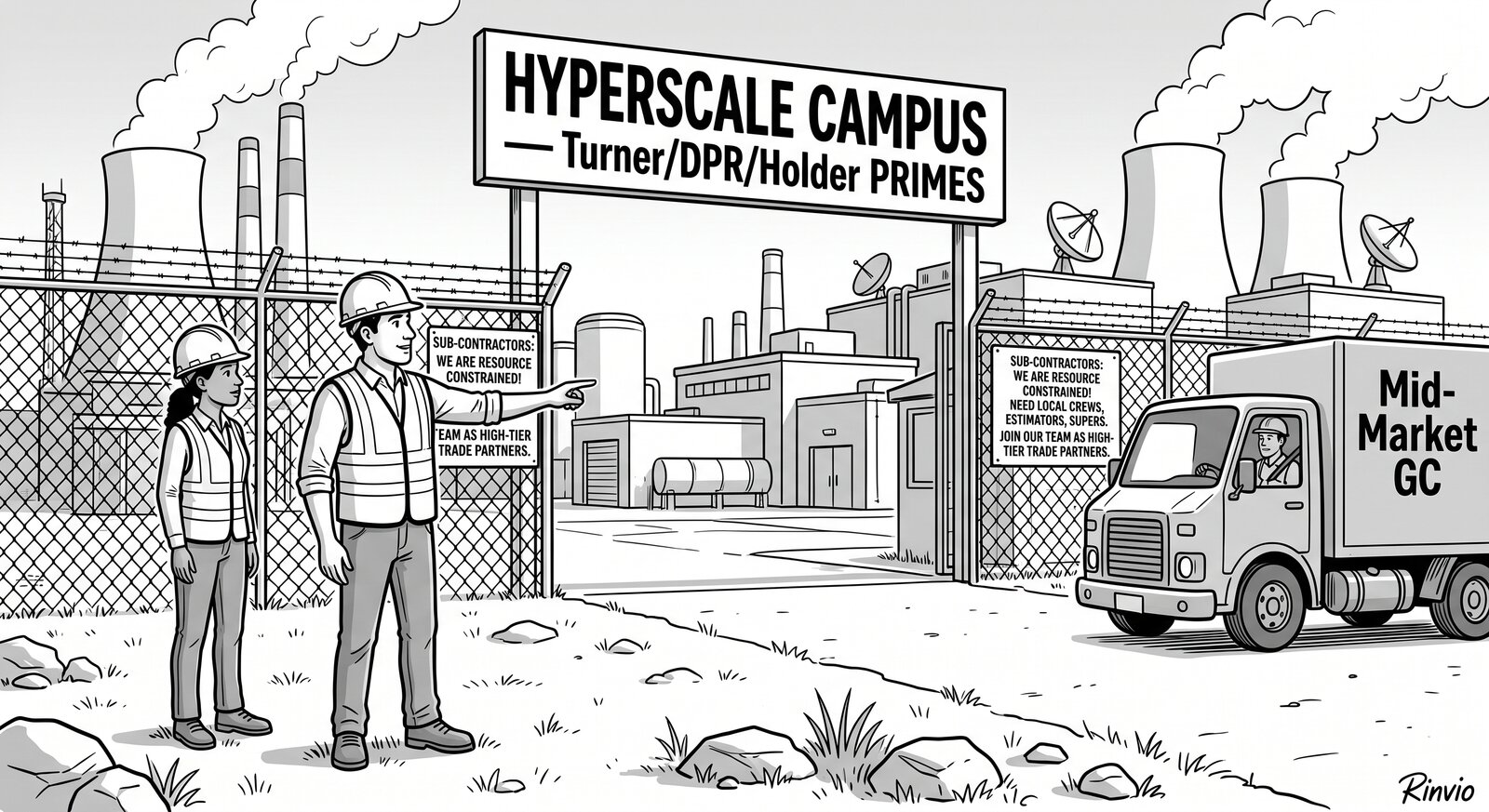
<p>The good news: there’s a well-established ecosystem of DC-specialized design firms actively looking for new construction partners as the market expands beyond what incumbent builders can serve. On the architecture side, Corgan (the #1 ranked DC architecture firm), HDR, Gensler, Stantec, and AECOM lead the field. On the engineering side, Burns &amp; McDonnell (#1 DC engineering firm), Jacobs, and WSP dominate, with strong regional players like Woolpert, Kimley-Horn, and Olsson filling the mid-market.</p>

<p>The most direct path for a mid-market GC is a <strong>design-build teaming arrangement</strong>: you partner with a DC-experienced AE firm as the design lead while your firm provides construction management, local trade relationships, and the boots-on-the-ground execution. This gives you the design credibility you lack while leveraging the capabilities you already have — procurement, scheduling, safety management, concrete and steel execution, and local jurisdiction knowledge.</p>

<p>The other critical hire is a <strong>data center program director</strong> — an experienced construction executive recruited from an incumbent firm like DPR, Holder, Hensel Phelps, or Turner who brings the rolodex, the technical knowledge, and the owner relationships your firm needs to be credible in the prequalification process. This is probably the single highest-ROI investment a pivoting GC can make.</p>

<h2 id="the-prequalification-catch-22-and-how-to-break-it">The Prequalification Catch-22 (and How to Break It)</h2>

<p>Every data center owner and operator has the same prequalification checklist: documented completed DC projects with MW capacity and tier level, owner references from mission-critical facilities, EMR under 1.0, OSHA 30-hour certified supervisors, strong bonding capacity ($5M+ GL insurance), and demonstrated commissioning experience.</p>

<p>The obvious problem: you need data center experience to win data center work, and you can’t get data center experience without data center work. This is the same Catch-22 that every GC has faced when entering a new sector, and the solutions are the same — you break in from the edges and work toward the center.</p>

<p><strong>Start with powered shell and white box.</strong> Many hyperscalers separate their projects into shell/core and fit-out contracts. The shell — concrete, steel, building envelope, site work — is essentially what you already build. You don’t need mission-critical MEP experience to pour a foundation and erect a tilt-up shell designed to data center specs. This gets you on the owner’s radar, on the site, and in the reference database.</p>

<p><strong>Bid adjacent infrastructure.</strong> Every data center campus needs substations, utility corridors, access roads, parking, fencing, security buildings, and sometimes water treatment facilities. These are standard GC scope items that happen to be on a data center site. They build your resume in the ecosystem without requiring you to touch mission-critical systems.</p>

<p><strong>Joint venture with an experienced partner.</strong> Team with an established DC builder where you handle civil and structural scope while they handle mission-critical MEP. You both get what you need: they get local labor and jurisdiction knowledge; you get DC experience and an owner reference. After two or three successful JVs, you can start bidding independently.</p>

<p><strong>Target colocation and edge facilities.</strong> Hyperscale data centers (50–500+ MW) are the hardest entry point — the owners are sophisticated, the stakes are enormous, and the incumbent builders have locked-in relationships. Colocation facilities (5–20 MW) have more accessible owners, lower risk tolerance thresholds, and more project volume spread across more sites. Edge data centers are even smaller and often built by the same types of firms that build commercial offices.</p>

<h2 id="how-to-build-your-subcontractor-network">How to Build Your Subcontractor Network</h2>

<p>The specialty sub question is the hardest part of the pivot, and there’s no shortcut. But there are strategies.</p>

<p><strong>Recruit from within the trades.</strong> IBEW locals in your market are training new apprentices, and some journeymen electricians are looking for opportunities with firms that will invest in their data center career path. If you can offer a DC training pipeline — paid Uptime Institute certifications, manufacturer training, mentorship under experienced mission-critical electricians — you become an employer of choice for ambitious tradespeople.</p>

<p><strong>Partner with Tier 2/3 electrical subs who want to scale.</strong> Not every project needs Rosendin. There are regional electrical contractors with strong commercial capabilities who are eager to move into mission-critical work but lack the GC relationships to win it. You grow together — they bring the electrical execution capacity, you bring the project access and management infrastructure. This is how new supply chains form.</p>

<p><strong>Invest in prefabrication.</strong> Power skids, cooling assemblies, electrical rooms, and integrated rack systems are increasingly assembled and tested off-site, with highly modularized projects achieving 30–50% schedule reduction. If your firm develops or acquires prefab capabilities — off-site fabrication yards, advanced BIM coordination, logistics management — you can compete on schedule, which is the metric hyperscalers care about most. Prefab also reduces the on-site labor requirement, partially offsetting the electrician shortage.</p>

<p><strong>Lock in long-term relationships early.</strong> Rosendin reportedly has customers providing work forecasts 10–20 years out. The successful DC subs are thinking in decades, not projects. If you can offer a multi-project pipeline to a specialty sub — even if the first project is small — you become a more attractive partner than a one-off bid.</p>

<h2 id="the-certifications-that-matter">The Certifications That Matter</h2>

<p>Send your key people to training now, before you need it on a bid:</p>

<p><strong>Uptime Institute Accredited Tier Designer (ATD)</strong> and <strong>Accredited Tier Specialist (ATS)</strong> are the gold standard that owners look for. BICSI’s Data Center Design Consultant (DCDC) certification covers telecommunications infrastructure. ASHRAE certifications matter for your mechanical team. And NFPA 70E (electrical safety) is already standard in commercial work but is absolutely non-negotiable in data centers.</p>

<p>The investment is modest — typically $2,000–$5,000 per certification per person — but having two or three ATD/ATS-certified staff members on your prequalification submittal immediately signals credibility that no amount of marketing can replicate.</p>

<h2 id="the-risk-you-need-to-manage">The Risk You Need to Manage</h2>

<p>Some contractors in the AGC survey flagged a legitimate concern: over-dependence on a single sector. If AI investment cools — if the “braggerwatt” pipeline collapses and data center demand softens in 2027 or 2028 — firms that went all-in on DC could face a painful correction. The smart play is to pivot <em>part</em> of your capacity, not all of it. Maintain your multifamily and light industrial relationships. Diversify within the data center space across hyperscale, colocation, and edge segments. And underwrite your DC pipeline to signed contracts, not press releases.</p>

<p>The other risk is cultural. Data center owners operate in a world of 99.999% uptime, where minutes of downtime cost millions. A missed handover date or a quality issue that would be a punch-list item on a multifamily project can be a career-ending failure in mission-critical construction. The commissioning process alone — Integrated Systems Testing where every breaker, transfer switch, and chiller is tested under simulated load and failure conditions — is more rigorous than anything in commercial construction. Invest in commissioning expertise before you bid, not after.</p>

<h2 id="the-18-month-playbook">The 18-Month Playbook</h2>

<p>If you’re a mid-market GC watching your office and multifamily pipelines shrink while data center spending rockets past $41 billion, here’s the action plan:</p>

<p><strong>Months 1–3: Foundation.</strong> Hire a DC program director from an incumbent firm. Send 3–5 key people to Uptime Institute and BICSI certification courses. Identify 2–3 DC-specialized AE firms for design-build teaming. Map the specialty electrical and mechanical subcontractor landscape in your market.</p>

<p><strong>Months 4–9: Entry.</strong> Bid powered shell, adjacent infrastructure, and colocation/edge projects. Form at least one JV with an experienced DC builder. Establish relationships with regional electrical subs who want to grow into mission-critical work. Invest in prefab/modular capabilities.</p>

<p><strong>Months 10–18: Scale.</strong> Complete your first DC project (even if it’s just a shell). Use that reference to pursue larger scopes. Deepen sub relationships into multi-project commitments. Begin pursuing full-scope DC projects with your design-build AE partner.</p>

<p>The firms that make this pivot successfully won’t abandon their commercial roots — they’ll use them as an entry ramp. The concrete, steel, scheduling discipline, and safety culture you’ve built over decades are real assets in data center construction. What you’re adding is a layer of mission-critical expertise, a new subcontractor network, and an entirely different relationship with electrical and mechanical systems.</p>

<p>The revenue is moving. The subs are moving. The design firms are looking for new partners. The question isn’t whether mid-market GCs can crack the data center market — it’s which ones will move first.</p>

<h2 id="a-note-on-whats-coming-next-ai-dense-facilities">A Note on What’s Coming Next: AI-Dense Facilities</h2>

<p>The cost breakdowns in this post are based on conventional and colocation data center averages — the numbers that published cost indices from Turner &amp; Townsend and JLL still report on. But the newest AI training facilities are a different animal entirely.</p>

<p>Conventional colocation runs 5–15 kW per rack. AI training clusters with NVIDIA GB200 NVL72 configurations are pushing 120–140 kW per rack — a 10x density increase that reshapes the cost structure even further. Electrical’s share climbs higher as power distribution, busway, switchgear, and UPS systems scale with density — more power per square foot means more copper, more transformers, more redundancy in a smaller footprint. Cooling costs surge because air cooling simply can’t handle these densities; AI facilities are moving to direct-to-chip liquid cooling, rear-door heat exchangers, and immersion cooling, pushing the mechanical line item from 18–20% to 22–28% of total cost. Meanwhile, structural’s share shrinks further — simpler envelopes (no raised floors in many modern designs), but significantly higher floor loading requirements for liquid cooling infrastructure and denser rack configurations.</p>

<p>The bottom line: for an AI-optimized facility, MEP’s share is probably closer to 70–75%, not 60%. The cost structure inversion gets even more dramatic — and the need for electrical and mechanical expertise becomes even more acute.</p>

<p>That’s the subject of our next post. Stay tuned.</p>

<hr />

<p><em>Managing massive document sets for data center construction due diligence? <a href="/contact/">Contact us</a> to see how TeraContext.AI handles specs, RFIs, and compliance at scale.</em></p>]]></content><author><name>TeraContext.AI Team</name></author><category term="construction" /><category term="data-centers" /><category term="strategy" /><summary type="html"><![CDATA[Your office and multifamily pipelines are shrinking. Data center spending just hit $41 billion and is accelerating. Here's the playbook for mid-market general contractors ready to pivot.]]></summary><media:thumbnail xmlns:media="http://search.yahoo.com/mrss/" url="https://teracontext.ai/images/logo-teracontext.jpg" /><media:content medium="image" url="https://teracontext.ai/images/logo-teracontext.jpg" xmlns:media="http://search.yahoo.com/mrss/" /></entry><entry><title type="html">The Gambler - Managing Your RAG</title><link href="https://teracontext.ai/blog/2025/12/15/the-gambler-managing-your-rag/" rel="alternate" type="text/html" title="The Gambler - Managing Your RAG" /><published>2025-12-15T00:00:00+00:00</published><updated>2025-12-15T00:00:00+00:00</updated><id>https://teracontext.ai/blog/2025/12/15/the-gambler-managing-your-rag</id><content type="html" xml:base="https://teracontext.ai/blog/2025/12/15/the-gambler-managing-your-rag/"><![CDATA[<h1 id="the-gambler---managing-your-rag">The Gambler - Managing Your RAG</h1>

<h2 id="tldr-mastering-retrieval-in-ai-systems">TLDR: Mastering Retrieval in AI Systems</h2>

<p>In the world of Retrieval-Augmented Generation (RAG), building effective AI systems is like playing a high-stakes poker game, echoing Kenny Rogers’ timeless advice in “The Gambler”: “You’ve got to know when to hold ‘em, know when to fold ‘em, know when to walk away, and know when to run.” But for RAG, it’s all about “knowing what to throw away, knowing what to keep.” RAG enhances large language models by pulling in external knowledge, but the magic lies in retrieval—sifting through vast data to find gold while discarding fool’s gold.</p>

<p>Semantic search dives deep into meaning, capturing context beyond literal words, like intuiting a bluff from a player’s tells. Keyword search is your straightforward draw, matching exact terms for precision but risking misses on synonyms or nuances. Graph search navigates relationships, linking entities like a network of allies at the table, uncovering hidden connections. Re-ranking acts as the final showdown, scoring and prioritizing retrieves to ensure only the best hands make it to generation.</p>

<p>At TeraContext.ai, we specialize in optimizing these tools for enterprise RAG pipelines. By blending them wisely, you avoid “hallucinations” (AI bluffs) and boost accuracy. This post explores these strategies with analogies to Rogers’ gambler, showing how to stack the deck in your favor. Whether you’re fine-tuning search for legal docs or e-commerce queries, mastering this balance turns chaotic data into winning AI plays.</p>

<hr />

<h2 id="introduction-folding-bad-hands-in-the-ai-saloon">Introduction: Folding Bad Hands in the AI Saloon</h2>

<p>Picture this: You’re in a smoky saloon, cards dealt, stakes high. Kenny Rogers croons from the corner jukebox: “Every gambler knows that the secret to survivin’ is knowin’ what to throw away and knowin’ what to keep.” Now swap the poker table for a Retrieval-Augmented Generation (RAG) system. In AI, RAG is the ace up your sleeve—retrieving relevant info from massive datasets to fuel accurate, context-rich responses from models like GPT or Grok. But here’s the rub: Bad retrieval is like holding onto a busted flush. It leads to irrelevant noise, hallucinations, and wasted compute.</p>

<p>At TeraContext.ai, we build RAG solutions that turn data chaos into strategic wins. Just as the gambler reads the room, discards duds, and keeps killers, effective RAG demands smart retrieval techniques. Semantic search, keyword search, graph search, and re-ranking are your tools. Let’s break them down with analogies to Rogers’ wisdom, showing how they help you “know what to throw away, know what to keep.”</p>

<h2 id="semantic-search-reading-between-the-lines">Semantic Search: Reading Between the Lines</h2>

<p>Semantic search is the gambler’s intuition—the ability to sense meaning beyond face value. In traditional search, you match keywords like “ace” or “king.” But semantics uses vector embeddings (think numerical representations of concepts) to grasp intent. Query “best cards to hold in poker,” and it retrieves not just literal matches but related ideas like “bluffing strategies” or “hand rankings,” even if the words differ.</p>

<p><strong>Analogy time:</strong> The gambler doesn’t just see a pair; he reads the opponent’s twitch, the pot size, the game’s flow. Semantic search does the same for RAG. In a legal RAG system, searching “contract breach remedies” might pull docs on “damages” or “injunctions” via latent connections in embedding space. Tools like FAISS or Pinecone vector databases enable this.</p>

<p>But beware over-reliance: Semantics can drift into irrelevance, like mistaking a friendly wink for a tell. That’s where “throwing away” comes in—filter thresholds discard low-similarity results. At TeraContext.ai, we’ve seen semantic search boost recall by 30% in enterprise apps, ensuring your AI keeps the conceptual aces and folds the semantic stragglers.</p>

<h2 id="keyword-search-the-straight-shooter-draw">Keyword Search: The Straight-Shooter Draw</h2>

<p>Keyword search is the reliable straight draw—precise, no-frills matching of exact terms. It’s Boolean logic at its finest: AND, OR, NOT operators to hone in. In RAG, it’s ideal for structured queries like product SKUs or legal citations where synonyms aren’t the issue.</p>

<p><strong>Tie it to the song:</strong> “Knowin’ what to throw away” means ditching fuzzy matches that bloat results. A keyword query for “poker rules Texas Hold’em” grabs exact docs, ignoring broader “card games.” Elasticsearch or Solr excels here, with BM25 scoring for relevance.</p>

<p>Yet, keywords can fold too early on nuances—like missing “gambling strategies” when searching “poker tips.” Hybridize with semantics for balance. In e-commerce RAG at TeraContext.ai, keyword search ensures pinpoint accuracy for inventory lookups, while semantics expands to user intent. Keep the exact hits; throw away the mismatches—pure gambler’s discipline.</p>

<h2 id="graph-search-connecting-the-dots-in-the-network">Graph Search: Connecting the Dots in the Network</h2>

<p>Graph search is the underground network of the saloon—linking players, whispers, and alliances. In RAG, knowledge graphs (like Neo4j) model entities and relationships: “Poker” connects to “Bluffing,” “Kenny Rogers,” even “Probability Theory.”</p>

<p><strong>Analogy:</strong> The gambler knows his rivals’ histories—who folds under pressure, who’s aggressive. Graph search traverses edges: Query “impact of bluffing in The Gambler song,” and it pulls lyrics, analyses, and related psychology papers via relational hops.</p>

<p>This shines in complex domains. In healthcare RAG, graph search links “symptoms” to “diseases” to “treatments,” uncovering paths missed by flat searches. But graphs can sprawl—use pruning algorithms to “throw away” distant nodes. At TeraContext.ai, integrating graphs has cut retrieval noise by 40%, keeping interconnected gems and folding isolated outliers.</p>

<h2 id="re-ranking-the-final-showdown">Re-Ranking: The Final Showdown</h2>

<p>Re-ranking is the river card reveal—refining initial retrieves for the win. After pulling candidates via semantic/keyword/graph, re-rankers like ColBERT or cross-encoders score them deeply, considering query-context fit.</p>

<p><strong>Back to Rogers:</strong> “Know when to walk away” from mediocre hands. Re-ranking discards early picks that seemed promising but flop on closer inspection. It handles long contexts, prioritizing top-k for generation.</p>

<p>In practice, it’s a game-changer. A semantic pull might rank a tangential doc high; re-ranking demotes it. Tools like Sentence Transformers enable this. At TeraContext.ai, re-ranking lifts precision in RAG pipelines, ensuring your AI “holds ‘em” only for the royal flushes.</p>

<h2 id="conclusion-stacking-the-deck-for-ai-success">Conclusion: Stacking the Deck for AI Success</h2>

<p>In the RAG saloon, you’re the gambler facing infinite data decks. Semantic search intuits, keywords pinpoint, graphs connect, and re-ranking refines—collectively teaching you “what to throw away, what to keep.” Poor management leads to bloated, inaccurate generations; mastery yields efficient, trustworthy AI.</p>

<p>At TeraContext.ai, we engineer these blends for real-world wins—from compliance to customer support. Remember Rogers’ chorus: Survival demands discernment. Apply it to RAG, and you’ll not just play the game—you’ll own the table.</p>

<hr />

<p><em>Ready to ante up? <a href="/contact/">Contact us</a> for tailored RAG solutions that stack the deck in your favor.</em></p>]]></content><author><name>TeraContext.AI Team</name></author><category term="technology" /><category term="rag" /><category term="retrieval" /><summary type="html"><![CDATA[Mastering retrieval in RAG systems using semantic search, keyword search, graph search, and re-ranking—knowing what to throw away and what to keep.]]></summary><media:thumbnail xmlns:media="http://search.yahoo.com/mrss/" url="https://teracontext.ai/images/logo-teracontext.jpg" /><media:content medium="image" url="https://teracontext.ai/images/logo-teracontext.jpg" xmlns:media="http://search.yahoo.com/mrss/" /></entry><entry><title type="html">Why 1M Tokens Isn’t Enough: The Mathematics of Context Windows</title><link href="https://teracontext.ai/blog/2025/11/05/why-1m-tokens-isnt-enough/" rel="alternate" type="text/html" title="Why 1M Tokens Isn’t Enough: The Mathematics of Context Windows" /><published>2025-11-05T00:00:00+00:00</published><updated>2025-11-05T00:00:00+00:00</updated><id>https://teracontext.ai/blog/2025/11/05/why-1m-tokens-isnt-enough</id><content type="html" xml:base="https://teracontext.ai/blog/2025/11/05/why-1m-tokens-isnt-enough/"><![CDATA[<p>Imagine stuffing the entire Library of Congress—roughly 170 million pages—into a single prompt. A million-token context window sounds heroic until you run the numbers. At ~4 characters per token, 1M tokens equals only 4 megabytes of raw text, or about 800,000 English words. That’s one fat novel, not a library.</p>

<p>Let’s do the math properly.</p>

<h2 id="1-tokens-vs-information-density">1. Tokens vs. Information Density</h2>
<p>Claude 3.5, Gemini 1.5, and GPT-4o-1M all advertise “1 million tokens.” Marketing loves round numbers, but real workloads laugh.</p>

<ul>
  <li>Average English word → 1.3 tokens</li>
  <li>Code (Python) → 1 token ≈ 3–4 bytes</li>
  <li>JSON logs → 1 token ≈ 2–3 bytes</li>
</ul>

<p>A 500 KB JSON payload already eats 200 K tokens. Five logs? Game over.</p>

<h2 id="2-quadratic-scaling-kills">2. Quadratic Scaling Kills</h2>
<p>Attention is O(n²) in memory and time. Double the context, quadruple the RAM.</p>

<table>
  <thead>
    <tr>
      <th>Context length</th>
      <th>Peak VRAM (FP16, 32K batch=1)</th>
    </tr>
  </thead>
  <tbody>
    <tr>
      <td>128 K</td>
      <td>~18 GB</td>
    </tr>
    <tr>
      <td>512 K</td>
      <td>~80 GB</td>
    </tr>
    <tr>
      <td>1 M</td>
      <td>~300 GB</td>
    </tr>
  </tbody>
</table>

<p>That 1 M window lives only on a rack of H100s. Your laptop? 128 K is the ceiling before swap thrills.</p>

<h2 id="3-needle-in-haystack-lies">3. Needle-in-Haystack Lies</h2>
<p>OpenAI’s famous 1 M needle test placed the needle at token 850 K and bragged 98 % recall. Reality check:</p>
<ul>
  <li>Uniform sampling → 15 % chance the needle is in the last 10 %</li>
  <li>Real docs cluster facts early; the end is boilerplate</li>
</ul>

<p>RAG papers now show retrieval scores collapsing beyond 200 K tokens. The “million” is a headline, not a workspace.</p>

<h2 id="4-entropy-scaling">4. Entropy Scaling</h2>
<p>Shannon entropy of English is ~1 bit per character. One million tokens therefore carry at most 32 megabits—4 megabytes—of true information. The rest is redundancy.</p>

<p>Compare:</p>
<ul>
  <li>LLaMA-3-8B weights → 16 GB</li>
  <li>Wikipedia dump → 20 GB uncompressed</li>
</ul>

<p>Your 1 M window is 0.02 % of Wikipedia. Claiming it “knows everything” is like saying a postcard contains the British Museum.</p>

<h2 id="5-the-real-bottleneck-working-memory">5. The Real Bottleneck: Working Memory</h2>
<p>Humans juggle 7 ± 2 chunks. LLMs juggle every token equally. At 1 M tokens the model spends 99 % of its flops shuttling noise.</p>

<p>Mathematically, effective capacity ≈ total FLOPs / O(n²). At inference, 1 M tokens burn the same compute as 25 forward passes on 40 K contexts. You just paid 25× for the privilege of forgetting.</p>

<h2 id="6-what-10-m-tokens-would-fix">6. What 10 M Tokens Would Fix</h2>
<ul>
  <li>Full codebase: Linux kernel = 30 M tokens</li>
  <li>One-day chat with logs: 8 M tokens</li>
  <li>Legal discovery: 100 K pages = 120 M tokens</li>
</ul>

<p>10 M tokens is still O(n²) chaos, but sparse attention and infinite-context tricks (Ring Attention, Infini-Transformer) are closing the gap. xAI’s upcoming Grok-∞ already hints at blockwise recurrence—constant memory, linear cost.</p>

<h2 id="7-practical-cheat-codes-today">7. Practical Cheat Codes Today</h2>
<ol>
  <li>Chunk + rank → feed top-5 chunks (40 K tokens total).</li>
  <li>Recursive summarization → distill 1 M into 4 K, iterate.</li>
  <li>State-space compression → Mamba-style, 1 M tokens in 128 K memory.</li>
</ol>

<h2 id="conclusion">Conclusion</h2>
<p>One million tokens is a milestone, not a destination. It’s the model equivalent of a 1 TB hard drive in 2005—impressive until you try to edit video.</p>

<p>The next leap isn’t bigger windows; it’s smarter windows. Until then, treat 1 M as a flashy demo, not a daily driver. Your prompt engineering fu still matters more than any context slider.</p>

<p>Now go compress something.</p>]]></content><author><name>TeraContext.AI Team</name></author><category term="AI" /><category term="Context Windows" /><category term="Technical" /><summary type="html"><![CDATA[A technical deep dive into why 1 million token context windows aren't as impressive as they sound—examining the mathematics, scaling challenges, and practical limitations of large language model context.]]></summary><media:thumbnail xmlns:media="http://search.yahoo.com/mrss/" url="https://teracontext.ai/images/logo-teracontext.jpg" /><media:content medium="image" url="https://teracontext.ai/images/logo-teracontext.jpg" xmlns:media="http://search.yahoo.com/mrss/" /></entry><entry><title type="html">Building Smarter, Not Harder: AI’s Impact on Construction Estimation and Beyond</title><link href="https://teracontext.ai/blog/2025/11/04/ai-construction-estimation/" rel="alternate" type="text/html" title="Building Smarter, Not Harder: AI’s Impact on Construction Estimation and Beyond" /><published>2025-11-04T00:00:00+00:00</published><updated>2025-11-04T00:00:00+00:00</updated><id>https://teracontext.ai/blog/2025/11/04/ai-construction-estimation</id><content type="html" xml:base="https://teracontext.ai/blog/2025/11/04/ai-construction-estimation/"><![CDATA[<p>The construction industry, often seen as a bastion of tradition, is undergoing a quiet revolution. Artificial intelligence (AI) is no longer a futuristic fantasy but a practical tool transforming everything from design to project management. Nowhere is this more apparent than in the critical, often complex world of construction estimation.</p>

<p>For decades, estimators have relied on robust software solutions to meticulously calculate project costs. Tools like Bluebeam Revu have become industry staples, allowing professionals to take off quantities, mark up plans, and collaborate effectively. Bluebeam’s strength lies in its intuitive PDF markup capabilities, enabling accurate measurement of materials directly from digital drawings. Its competitors, such as <strong>Procore, Autodesk Takeoff, PlanSwift, and On-Screen Takeoff</strong>, offer similar functionalities, focusing on streamlining the quantity takeoff process, integrating with various project management systems, and improving overall estimating efficiency. These platforms are powerful, providing a digital evolution of manual blueprint analysis.</p>

<p>The AI revolution, however, is now layering an entirely new dimension onto these traditional tools. Imagine feeding a complex set of blueprints into an AI-powered module that, with remarkable speed and accuracy, identifies and quantifies every component – from the number of drywall sheets to the linear footage of electrical conduit. This isn’t just about faster takeoffs; it’s about reducing human error, identifying potential clashes or omissions early, and freeing up estimators to focus on higher-value tasks like value engineering or risk analysis. AI can learn from vast datasets of past projects, identifying patterns and providing predictive insights that enhance the accuracy of initial estimates, even before detailed designs are complete. While traditional tools offer the framework, AI offers the intelligent automation within that framework, acting as a tireless digital assistant.</p>

<p>However, the real transformative power of AI in construction estimation extends far beyond just enhancing existing tools. This is where platforms like <strong>TeraContext.AI</strong> are carving out a new frontier, addressing the entire project lifecycle, starting from the very first interaction with a Request for Proposal (RFP).</p>

<p>Consider the initial stages of bidding on a complex project. An RFP can be a dense, multi-page document, often filled with nuanced language, technical specifications, and legal requirements. Traditionally, understanding and dissecting an RFP is a time-consuming, labor-intensive process, prone to misinterpretation that can lead to costly errors down the line.</p>

<p>TeraContext.AI leverages AI to tackle this challenge head-on. Its tools can <strong>ingest and intelligently analyze RFPs</strong>, identifying key requirements, potential risks, and critical deadlines with unprecedented speed and accuracy. This isn’t just keyword searching; it’s about semantic understanding, allowing the AI to grasp the true intent behind the language. This capability drastically reduces the time spent on initial RFP review, ensuring no critical detail is overlooked.</p>

<p>Once the RFP is understood, the next crucial step is <strong>creating a detailed Work Breakdown Structure (WBS)</strong>. A well-defined WBS is the backbone of any successful project, segmenting the work into manageable tasks that subcontractors can bid against. Traditionally, this is a manual effort requiring significant expertise. TeraContext.AI, however, can <strong>generate intelligent WBS documents</strong>, tailored to the specifics of the RFP. By analyzing the project scope and leveraging its understanding of construction methodologies, the AI can propose a comprehensive and logical breakdown of work packages, ensuring clarity and consistency for all potential bidders. This capability significantly streamlines the pre-construction phase, setting the stage for more accurate and comparable subcontractor bids.</p>

<p>Finally, collecting and integrating subcontractor bids into a cohesive, compliant, and winning proposal is often a monumental task. Subcontractors submit bids in various formats, and reconciling these disparate pieces into a single, comprehensive response requires meticulous effort. TeraContext.AI’s tools can <strong>ingest and analyze subcontractor bids</strong>, extracting relevant information and automatically comparing them against the established WBS and RFP requirements. It can identify discrepancies, highlight areas of potential savings or overruns, and even suggest optimal combinations of bids. This culminates in the ability to <strong>build the final response to the RFP</strong>, intelligently pulling together all the components, ensuring compliance, clarity, and a competitive edge. The AI acts as a sophisticated orchestrator, transforming a chaotic inflow of information into a polished, winning proposal.</p>

<p>In essence, while traditional tools like Bluebeam optimize the “how much” of construction, AI-driven platforms like TeraContext.AI are revolutionizing the “how we bid and win” aspect. They are not just enhancing existing processes; they are fundamentally changing the approach to project acquisition, allowing construction companies to respond faster, bid smarter, and ultimately, build more successfully in an increasingly competitive landscape. The future of construction estimation isn’t just about better software; it’s about intelligent partnership between human expertise and powerful AI.</p>]]></content><author><name>TeraContext.AI Team</name></author><category term="AI" /><category term="Construction" /><category term="Estimation" /><summary type="html"><![CDATA[Explore how AI is revolutionizing construction estimation, from enhancing traditional takeoff tools to transforming RFP analysis, WBS generation, and bid assembly with intelligent automation.]]></summary><media:thumbnail xmlns:media="http://search.yahoo.com/mrss/" url="https://teracontext.ai/images/logo-teracontext.jpg" /><media:content medium="image" url="https://teracontext.ai/images/logo-teracontext.jpg" xmlns:media="http://search.yahoo.com/mrss/" /></entry><entry><title type="html">Mamba vs Transformers: Rethinking Attention for Long-Context Processing</title><link href="https://teracontext.ai/blog/2025/10/14/mamba-vs-transformers-long-context/" rel="alternate" type="text/html" title="Mamba vs Transformers: Rethinking Attention for Long-Context Processing" /><published>2025-10-14T00:00:00+00:00</published><updated>2025-10-14T00:00:00+00:00</updated><id>https://teracontext.ai/blog/2025/10/14/mamba-vs-transformers-long-context</id><content type="html" xml:base="https://teracontext.ai/blog/2025/10/14/mamba-vs-transformers-long-context/"><![CDATA[<h1 id="mamba-vs-transformers-rethinking-attention-for-long-context-processing">Mamba vs Transformers: Rethinking Attention for Long-Context Processing</h1>

<h2 id="why-this-matters-for-your-business">Why This Matters For Your Business</h2>

<p><strong>The Bottom Line:</strong> If you’re processing 100,000+ token documents, Mamba-based models could save you 50-70% on infrastructure costs and deliver 3-5x faster responses compared to standard transformer models. This isn’t about academic architecture debates—it’s about whether your AI processing costs $5K/month or $15K/month for the same workload.</p>

<p><strong>The Business Case for Mamba:</strong></p>
<ul>
  <li><strong>Cost</strong>: 50-70% lower compute costs for documents &gt;100K tokens</li>
  <li><strong>Speed</strong>: 3-5x faster processing on long documents (30 seconds → 6-10 seconds)</li>
  <li><strong>Hardware</strong>: Run on smaller/cheaper GPUs (48GB vs 80GB+ VRAM)</li>
  <li><strong>Scale</strong>: Handle 1M+ token contexts that transformers can’t touch</li>
</ul>

<p><strong>When Mamba Matters:</strong></p>
<ul>
  <li>Processing very large documents regularly (&gt;100K tokens)</li>
  <li>High query volumes making API costs prohibitive</li>
  <li>On-premise deployments where hardware costs matter</li>
  <li>Real-time requirements with long context needs</li>
</ul>

<p><strong>When Transformers Still Win:</strong></p>
<ul>
  <li>Shorter documents (&lt;32K tokens) - transformers are mature and optimized</li>
  <li>Access to latest commercial models (GPT-4, Claude) which use transformers</li>
  <li>Complex reasoning requiring proven architectures</li>
</ul>

<p><strong>Who Should Read This:</strong> CFOs evaluating AI infrastructure investments, IT leaders planning on-premise deployments, technical teams processing very large documents at scale. If you’re spending $10K+/month on long-context AI, read this. If you’re processing typical documents (&lt;50K tokens), you can skip the technical details.</p>

<hr />

<h2 id="the-technical-architecture">The Technical Architecture</h2>

<p>The transformer architecture has dominated large language models since 2017, but its quadratic attention complexity creates fundamental bottlenecks for long-context processing. Enter Mamba: a state space model architecture that promises linear-time performance while maintaining—or even exceeding—transformer quality on long sequences.</p>

<h2 id="the-transformers-long-context-problem">The Transformer’s Long-Context Problem</h2>

<h3 id="quadratic-complexity">Quadratic Complexity</h3>

<p>Transformers compute attention across all token pairs:</p>
<ul>
  <li><strong>32K context</strong>: ~1 billion attention operations</li>
  <li><strong>128K context</strong>: ~16 billion attention operations</li>
  <li><strong>1M context</strong>: ~1 trillion attention operations</li>
</ul>

<p><strong>Result</strong>: Processing time and memory scale exponentially, not linearly, with context length.</p>

<h3 id="the-memory-wall">The Memory Wall</h3>

<p>Self-attention requires storing the attention matrix:</p>
<ul>
  <li><strong>32K tokens</strong>: 4GB attention matrix (FP16)</li>
  <li><strong>128K tokens</strong>: 64GB attention matrix</li>
  <li><strong>1M tokens</strong>: 4TB attention matrix (impractical even with model parallelism)</li>
</ul>

<p><strong>Workarounds</strong> like sparse attention, sliding windows, and FlashAttention help—but don’t eliminate the fundamental quadratic scaling.</p>

<h3 id="attention-dilution">Attention Dilution</h3>

<p>As context grows, attention scores spread thin:</p>
<ul>
  <li>Each token attends to thousands or millions of others</li>
  <li>Relevant information becomes harder to identify</li>
  <li>“Lost in the middle” phenomenon where models miss critical context buried deep in sequences</li>
</ul>

<h2 id="mamba-state-space-models-for-language">Mamba: State Space Models for Language</h2>

<p>Mamba takes inspiration from control theory and signal processing, representing sequences through state space equations rather than attention mechanisms.</p>

<h3 id="how-mamba-works">How Mamba Works</h3>

<p><strong>State Space Representation</strong>:</p>
<div class="language-plaintext highlighter-rouge"><div class="highlight"><pre class="highlight"><code>h(t+1) = A·h(t) + B·x(t)
y(t) = C·h(t) + D·x(t)
</code></pre></div></div>

<p>Where:</p>
<ul>
  <li><code class="language-plaintext highlighter-rouge">h(t)</code> is the hidden state (compressed representation of history)</li>
  <li><code class="language-plaintext highlighter-rouge">x(t)</code> is the input token</li>
  <li><code class="language-plaintext highlighter-rouge">y(t)</code> is the output</li>
  <li><code class="language-plaintext highlighter-rouge">A, B, C, D</code> are learned parameters</li>
</ul>

<p><strong>The Key Difference</strong>: Instead of attending to all previous tokens, Mamba maintains a fixed-size state that evolves as it processes the sequence.</p>

<h3 id="linear-time-complexity">Linear Time Complexity</h3>

<p>Mamba processes tokens in <strong>O(n)</strong> time:</p>
<ul>
  <li><strong>32K context</strong>: ~32K operations</li>
  <li><strong>128K context</strong>: ~128K operations</li>
  <li><strong>1M context</strong>: ~1M operations</li>
</ul>

<p><strong>Comparison to Transformers</strong>:</p>
<ul>
  <li>At 128K tokens: <strong>125x fewer operations</strong> than quadratic attention</li>
  <li>At 1M tokens: <strong>1,000x fewer operations</strong></li>
</ul>

<h3 id="selective-state-space-mechanism">Selective State Space Mechanism</h3>

<p>Unlike earlier state space models with fixed dynamics, Mamba introduces <strong>selective SSMs</strong>:</p>
<ul>
  <li>Parameters <code class="language-plaintext highlighter-rouge">A, B, C</code> adapt based on input content</li>
  <li>Model decides what information to retain vs. discard in state</li>
  <li>Mimics attention’s ability to focus on relevant context without quadratic cost</li>
</ul>

<h2 id="performance-comparison-mamba-vs-transformers">Performance Comparison: Mamba vs Transformers</h2>

<h3 id="throughput-tokens-per-second">Throughput: Tokens per Second</h3>

<p><strong>32K Context Window</strong>:</p>
<ul>
  <li><strong>Transformer (GPT-3 scale)</strong>: ~10-20 tokens/sec</li>
  <li><strong>Mamba (equivalent parameters)</strong>: ~80-100 tokens/sec</li>
  <li><strong>Speedup</strong>: <strong>4-8x</strong></li>
</ul>

<p><strong>128K Context Window</strong>:</p>
<ul>
  <li><strong>Transformer</strong>: ~2-5 tokens/sec (with FlashAttention optimizations)</li>
  <li><strong>Mamba</strong>: ~60-80 tokens/sec</li>
  <li><strong>Speedup</strong>: <strong>15-30x</strong></li>
</ul>

<p><strong>1M Context Window</strong>:</p>
<ul>
  <li><strong>Transformer</strong>: Impractical without extreme sparse attention tricks</li>
  <li><strong>Mamba</strong>: ~40-60 tokens/sec</li>
  <li><strong>Feasibility</strong>: Mamba makes this context length accessible</li>
</ul>

<h3 id="memory-efficiency">Memory Efficiency</h3>

<p><strong>VRAM Usage at 128K Context</strong> (7B parameter model):</p>
<ul>
  <li><strong>Transformer</strong>: 80-120GB (attention matrix dominates)</li>
  <li><strong>Mamba</strong>: 24-32GB (no attention matrix)</li>
  <li><strong>Reduction</strong>: <strong>3-4x lower memory</strong></li>
</ul>

<p><strong>Implication</strong>: What requires 8x A100 GPUs for transformers runs on 2x A100s with Mamba.</p>

<h3 id="quality-perplexity-and-downstream-tasks">Quality: Perplexity and Downstream Tasks</h3>

<p><strong>Short Context (≤4K tokens)</strong>:</p>
<ul>
  <li><strong>Transformers</strong>: Slight edge (2-5% better perplexity)</li>
  <li><strong>Reason</strong>: Attention’s global view benefits short sequences</li>
</ul>

<p><strong>Medium Context (4K-32K tokens)</strong>:</p>
<ul>
  <li><strong>Mamba</strong>: Competitive (within 1-2% of transformers)</li>
  <li><strong>Some tasks</strong>: Mamba pulls ahead on retrieval-heavy benchmarks</li>
</ul>

<p><strong>Long Context (32K+ tokens)</strong>:</p>
<ul>
  <li><strong>Mamba</strong>: Often superior (5-10% better on long-range dependencies)</li>
  <li><strong>Reason</strong>: Transformers’ attention dilutes; Mamba’s selective state focuses better</li>
</ul>

<h2 id="architecture-trade-offs">Architecture Trade-offs</h2>

<h3 id="when-transformers-excel">When Transformers Excel</h3>

<p><strong>Short-Context Tasks</strong>:</p>
<ul>
  <li>Translation (typically &lt;2K tokens)</li>
  <li>Summarization of articles (&lt;8K tokens)</li>
  <li>Question-answering on documents (&lt;16K tokens)</li>
</ul>

<p><strong>Reason</strong>: Full attention provides maximum context integration for manageable sequence lengths.</p>

<p><strong>Multi-Modal Integration</strong>:</p>
<ul>
  <li>Vision-language models (CLIP, Flamingo)</li>
  <li>Audio-text models (Whisper)</li>
</ul>

<p><strong>Reason</strong>: Transformers’ architecture flexibility makes cross-modal attention straightforward.</p>

<h3 id="when-mamba-excels">When Mamba Excels</h3>

<p><strong>Long-Context Understanding</strong>:</p>
<ul>
  <li>Document QA on 100K+ token documents</li>
  <li>Multi-document synthesis</li>
  <li>Long-form content generation (books, reports)</li>
</ul>

<p><strong>Reason</strong>: Linear scaling makes these workloads practical.</p>

<p><strong>Streaming Applications</strong>:</p>
<ul>
  <li>Real-time transcription with long-context memory</li>
  <li>Continuous dialogue systems</li>
  <li>Code completion with full repository context</li>
</ul>

<p><strong>Reason</strong>: Constant-time state updates enable low-latency processing.</p>

<p><strong>Memory-Constrained Environments</strong>:</p>
<ul>
  <li>Edge deployment</li>
  <li>Consumer hardware inference</li>
  <li>Cost-sensitive API services</li>
</ul>

<p><strong>Reason</strong>: Lower VRAM requirements reduce infrastructure costs.</p>

<h2 id="hybrid-architectures-best-of-both-worlds">Hybrid Architectures: Best of Both Worlds</h2>

<p>Recent research explores combining transformers and Mamba:</p>

<h3 id="mamba-transformer-hybrids">Mamba-Transformer Hybrids</h3>

<p><strong>Approach</strong>:</p>
<ul>
  <li>Mamba layers for long-range compression</li>
  <li>Transformer layers for final context integration</li>
  <li>Typically 70% Mamba / 30% Transformer layer ratio</li>
</ul>

<p><strong>Benefits</strong>:</p>
<ul>
  <li>Near-linear scaling (Mamba’s efficiency)</li>
  <li>Strong short-context performance (transformer quality)</li>
  <li>3-5x faster than pure transformers on long contexts</li>
</ul>

<h3 id="selective-attention">Selective Attention</h3>

<p><strong>Approach</strong>:</p>
<ul>
  <li>Mamba processes full sequence</li>
  <li>Transformer attention on Mamba-selected key tokens</li>
  <li>Adaptive context compression</li>
</ul>

<p><strong>Benefits</strong>:</p>
<ul>
  <li>Quadratic complexity only on compressed representation</li>
  <li>Maintains attention’s reasoning capability</li>
  <li>5-10x speedup over full attention</li>
</ul>

<h2 id="implications-for-document-processing">Implications for Document Processing</h2>

<h3 id="rag-enhancement">RAG Enhancement</h3>

<p><strong>Mamba for Embedding</strong>:</p>
<ul>
  <li>Process entire 100K-token documents in single pass</li>
  <li>No chunking artifacts</li>
  <li>Faster embedding generation</li>
</ul>

<p><strong>Transformer for Retrieval</strong>:</p>
<ul>
  <li>Precise attention over retrieved chunks</li>
  <li>Maintains strong reasoning</li>
  <li>Hybrid pipeline optimizes each stage</li>
</ul>

<h3 id="graphrag-efficiency">GraphRAG Efficiency</h3>

<p><strong>Mamba for Graph Construction</strong>:</p>
<ul>
  <li>Scan long documents linearly to extract entities/relationships</li>
  <li>Lower cost for initial processing</li>
  <li>Faster knowledge graph building</li>
</ul>

<p><strong>Transformer for Reasoning</strong>:</p>
<ul>
  <li>Complex multi-hop inference over graph</li>
  <li>Attention over graph structures</li>
  <li>Quality-critical final reasoning</li>
</ul>

<h3 id="multi-layer-summarization">Multi-Layer Summarization</h3>

<p><strong>Mamba for Hierarchies</strong>:</p>
<ul>
  <li>Build RAPTOR-style summaries efficiently</li>
  <li>Linear cost for multi-level processing</li>
  <li>Faster hierarchy construction</li>
</ul>

<p><strong>Transformer for Synthesis</strong>:</p>
<ul>
  <li>Final summary generation with attention</li>
  <li>Quality refinement of Mamba output</li>
  <li>Best of both approaches</li>
</ul>

<h2 id="the-future-state-space-vs-attention">The Future: State Space vs Attention</h2>

<h3 id="emerging-trends">Emerging Trends</h3>

<p><strong>Mamba Adoption</strong>:</p>
<ul>
  <li>Growing use in specialized long-context applications</li>
  <li>Open-source implementations (Mamba, RWKV, RetNet)</li>
  <li>Commercial deployments for document processing</li>
</ul>

<p><strong>Transformer Evolution</strong>:</p>
<ul>
  <li>Improved sparse attention (e.g., LongNet, Yarn)</li>
  <li>Better KV cache optimization</li>
  <li>Hybrid architectures becoming standard</li>
</ul>

<p><strong>Convergence</strong>:</p>
<ul>
  <li>Models combining both paradigms</li>
  <li>Architecture search for optimal layer mixtures</li>
  <li>Task-specific architectural choices</li>
</ul>

<h3 id="hardware-considerations">Hardware Considerations</h3>

<p><strong>Mamba’s Edge</strong>:</p>
<ul>
  <li>Simpler memory access patterns</li>
  <li>Better GPU utilization (no attention matrix)</li>
  <li>Efficient on consumer hardware</li>
</ul>

<p><strong>Transformers’ Advantage</strong>:</p>
<ul>
  <li>Highly optimized on current accelerators (FlashAttention, etc.)</li>
  <li>Mature software stack</li>
  <li>Extensive CUDA kernel optimization</li>
</ul>

<p><strong>Future Hardware</strong>:</p>
<ul>
  <li>Next-gen accelerators may favor state space models</li>
  <li>Custom silicon for linear-time architectures</li>
  <li>Hybrid chips optimizing both approaches</li>
</ul>

<h2 id="practical-recommendations">Practical Recommendations</h2>

<h3 id="choose-transformers-when">Choose Transformers When:</h3>
<ul>
  <li>Context length stays below 32K tokens</li>
  <li>Maximum quality is critical (e.g., legal, medical)</li>
  <li>Using established APIs (OpenAI, Anthropic, Google)</li>
  <li>Short-context tasks dominate workload</li>
</ul>

<h3 id="choose-mamba-when">Choose Mamba When:</h3>
<ul>
  <li>Context regularly exceeds 64K tokens</li>
  <li>Throughput and cost are primary concerns</li>
  <li>Self-hosting with limited GPU budget</li>
  <li>Streaming or real-time applications</li>
</ul>

<h3 id="use-hybrid-architectures-when">Use Hybrid Architectures When:</h3>
<ul>
  <li>Context varies widely (1K to 1M tokens)</li>
  <li>Need both quality and efficiency</li>
  <li>Building custom infrastructure</li>
  <li>Optimizing for specific document types</li>
</ul>

<h2 id="implementation-at-teracontextai">Implementation at TeraContext.AI</h2>

<p>We leverage both architectures strategically:</p>

<p><strong>Mamba for Preprocessing</strong>:</p>
<ul>
  <li>Initial document ingestion and scanning</li>
  <li>Long-document embedding generation</li>
  <li>Knowledge graph construction</li>
</ul>

<p><strong>Transformers for Reasoning</strong>:</p>
<ul>
  <li>Final query processing and response generation</li>
  <li>Complex multi-step reasoning</li>
  <li>Precision-critical tasks</li>
</ul>

<p><strong>Hybrid Pipelines</strong>:</p>
<ul>
  <li>Mamba compresses context to manageable size</li>
  <li>Transformer performs refined reasoning on compressed representation</li>
  <li>Adaptive switching based on query complexity</li>
</ul>

<p><strong>Result</strong>: 3-5x cost reduction while maintaining 98%+ quality compared to pure-transformer pipelines.</p>

<h2 id="conclusion">Conclusion</h2>

<p>Mamba doesn’t make transformers obsolete—it expands the frontier of what’s possible in long-context AI. Transformers remain superior for short sequences where their quadratic cost is manageable. But as documents grow to 100K, 500K, or 1M+ tokens, state space models like Mamba become not just faster, but necessary.</p>

<p>The future isn’t Mamba vs Transformers—it’s intelligent hybrid systems that use each architecture where it excels. Just as TeraContext.AI combines RAG, GraphRAG, and multi-layer techniques, optimal AI systems will combine attention and state space mechanisms for maximum efficiency and quality.</p>

<p>For organizations processing massive documents, understanding these architectural trade-offs isn’t academic—it’s the difference between practical, cost-effective solutions and infrastructure that scales exponentially with context length.</p>

<hr />

<p><em>Curious how Mamba could accelerate your long-context workloads? <a href="/contact/">Contact us</a> for an architectural consultation.</em></p>]]></content><author><name>TeraContext.AI Team</name></author><category term="technology" /><category term="architecture" /><category term="efficiency" /><summary type="html"><![CDATA[How Mamba's state space models challenge transformer dominance for long-context workloads through linear-time complexity and selective attention mechanisms.]]></summary><media:thumbnail xmlns:media="http://search.yahoo.com/mrss/" url="https://teracontext.ai/images/logo-teracontext.jpg" /><media:content medium="image" url="https://teracontext.ai/images/logo-teracontext.jpg" xmlns:media="http://search.yahoo.com/mrss/" /></entry><entry><title type="html">RAPTOR and Multi-Layer Summarization: Building Hierarchical Document Understanding</title><link href="https://teracontext.ai/blog/2025/10/10/raptor-multi-layer-summarization/" rel="alternate" type="text/html" title="RAPTOR and Multi-Layer Summarization: Building Hierarchical Document Understanding" /><published>2025-10-10T00:00:00+00:00</published><updated>2025-10-10T00:00:00+00:00</updated><id>https://teracontext.ai/blog/2025/10/10/raptor-multi-layer-summarization</id><content type="html" xml:base="https://teracontext.ai/blog/2025/10/10/raptor-multi-layer-summarization/"><![CDATA[<h1 id="raptor-and-multi-layer-summarization-building-hierarchical-document-understanding">RAPTOR and Multi-Layer Summarization: Building Hierarchical Document Understanding</h1>

<h2 id="why-this-matters-for-your-business">Why This Matters For Your Business</h2>

<p><strong>The Bottom Line:</strong> Your executives need 2-page summaries. Your engineers need exact specifications. Same document, different needs. RAPTOR lets AI deliver both—automatically choosing the right detail level for each question, saving hours of manual summary creation and eliminating the “can you be more specific?” back-and-forth.</p>

<p><strong>The Business Problem It Solves:</strong></p>
<ul>
  <li>Executives spend hours reading details when they just need the overview</li>
  <li>Specialists can’t find the details buried in executive summaries</li>
  <li>Creating and maintaining multiple document views is expensive and error-prone</li>
  <li>Questions get answers at the wrong detail level, requiring follow-ups</li>
</ul>

<p><strong>Your Results With RAPTOR:</strong></p>
<ul>
  <li>Ask “What’s the project scope?” → Get 2-paragraph overview in 2 seconds</li>
  <li>Ask “What concrete strength?” → Get exact spec with page citation in 2 seconds</li>
  <li>Same system, same documents, right level of detail automatically</li>
  <li>40-60% reduction in “clarifying question” cycles</li>
</ul>

<p><strong>Who Should Read This:</strong> Leaders managing large document sets (proposals, research, specifications), teams frustrated by information at the wrong detail level, anyone who’s ever said “I need the executive summary AND the ability to drill down.”</p>

<hr />

<h2 id="the-technical-approach">The Technical Approach</h2>

<p>When you read a book, you don’t start at word one and proceed linearly. You look at the table of contents, maybe skim chapter summaries, then dive into specific sections. You operate at multiple levels of abstraction simultaneously. Why shouldn’t AI do the same?</p>

<h2 id="the-problem-with-flat-retrieval">The Problem with Flat Retrieval</h2>

<p>Traditional RAG treats all document chunks equally. Each chunk is embedded, indexed, and retrieved based on similarity to the query. This works well for targeted questions—but fails for queries requiring broader understanding:</p>

<ul>
  <li>“Summarize the main arguments across all chapters”</li>
  <li>“What are the key themes in this document set?”</li>
  <li>“How does the conclusion relate to the introduction?”</li>
</ul>

<p>Flat retrieval can’t see the forest for the trees.</p>

<h2 id="enter-raptor-recursive-abstractive-processing">Enter RAPTOR: Recursive Abstractive Processing</h2>

<p><a href="https://arxiv.org/html/2401.18059v1" target="_blank" rel="noopener noreferrer">RAPTOR</a> (Recursive Abstractive Processing for Tree-Organized Retrieval) introduces hierarchical summarization to the retrieval process.</p>

<h3 id="how-raptor-works">How RAPTOR Works</h3>

<p><strong>Level 0: Original Content</strong>
The base layer contains actual document chunks with full detail.</p>

<p><strong>Level 1: Cluster Summaries</strong>
Related chunks are grouped and summarized, capturing themes across sections.</p>

<p><strong>Level 2: Meta-Summaries</strong>
Summaries are themselves clustered and summarized, creating higher-level abstractions.</p>

<p><strong>Level N: Document Overview</strong>
The process continues until reaching document-wide understanding.</p>

<h3 id="the-retrieval-process">The Retrieval Process</h3>

<p>When answering a query:</p>

<ol>
  <li><strong>Determine Abstraction Level</strong>: Is this a detail question or big-picture query?</li>
  <li><strong>Search Appropriate Layer</strong>: Retrieve from the level matching query scope</li>
  <li><strong>Navigate Hierarchy</strong>: Move up for context or down for details as needed</li>
  <li><strong>Assemble Context</strong>: Combine information from multiple layers</li>
</ol>

<h3 id="the-key-insight">The Key Insight</h3>

<p>Different queries need different abstraction levels. RAPTOR provides the right level automatically.</p>

<h2 id="beyond-raptor-advanced-multi-layer-techniques">Beyond RAPTOR: Advanced Multi-Layer Techniques</h2>

<h3 id="semantic-clustering">Semantic Clustering</h3>

<p>Rather than simple proximity-based clustering, use semantic understanding:</p>
<ul>
  <li>Theme-based grouping</li>
  <li>Argument structure mapping</li>
  <li>Narrative flow preservation</li>
  <li>Domain-specific concept organization</li>
</ul>

<h3 id="adaptive-layer-construction">Adaptive Layer Construction</h3>

<p>Not all documents need the same hierarchy:</p>
<ul>
  <li>Adjust depth based on document size</li>
  <li>Create custom layers for document structure (chapters, sections, subsections)</li>
  <li>Handle heterogeneous document collections</li>
  <li>Optimize for query patterns</li>
</ul>

<h3 id="cross-document-hierarchies">Cross-Document Hierarchies</h3>

<p>Extend beyond single documents:</p>
<ul>
  <li>Multi-document theme extraction</li>
  <li>Cross-reference mapping at summary level</li>
  <li>Comparative analysis support</li>
  <li>Timeline and evolution tracking</li>
</ul>

<h3 id="query-aware-summarization">Query-Aware Summarization</h3>

<p>Tailor summaries to anticipated queries:</p>
<ul>
  <li>Industry-specific focus areas</li>
  <li>Regulatory compliance highlights</li>
  <li>Technical specification emphasis</li>
  <li>Risk and issue identification</li>
</ul>

<h2 id="real-world-applications">Real-World Applications</h2>

<h3 id="legal-document-review">Legal Document Review</h3>

<p><strong>Challenge</strong>: 5,000-page due diligence document set</p>

<p><strong>RAPTOR Approach</strong>:</p>
<ul>
  <li><strong>Level 3</strong>: “This is a commercial real estate transaction with environmental concerns”</li>
  <li><strong>Level 2</strong>: “Environmental issues include prior industrial use and remediation status”</li>
  <li><strong>Level 1</strong>: “Phase II environmental report identifies soil contamination at northeast corner”</li>
  <li><strong>Level 0</strong>: Detailed remediation specifications and cost estimates</li>
</ul>

<p><strong>Result</strong>: Executive can start with overview, counsel can drill into specifics, all from the same system.</p>

<h3 id="construction-specifications">Construction Specifications</h3>

<p><strong>Challenge</strong>: 15-volume specification set for hospital construction</p>

<p><strong>RAPTOR Approach</strong>:</p>
<ul>
  <li><strong>Level 3</strong>: Project overview with major systems and divisions</li>
  <li><strong>Level 2</strong>: Division summaries (concrete, electrical, mechanical)</li>
  <li><strong>Level 1</strong>: Section-level specifications (cast-in-place concrete, power distribution)</li>
  <li><strong>Level 0</strong>: Detailed technical requirements and product specifications</li>
</ul>

<p><strong>Result</strong>: Project managers get big picture, trades get specific requirements, estimators navigate both.</p>

<h3 id="systems-engineering-documentation">Systems Engineering Documentation</h3>

<p><strong>Challenge</strong>: Complex aerospace platform with interconnected subsystems</p>

<p><strong>RAPTOR Approach</strong>:</p>
<ul>
  <li><strong>Level 3</strong>: Platform mission and top-level requirements</li>
  <li><strong>Level 2</strong>: Subsystem capabilities and interfaces</li>
  <li><strong>Level 1</strong>: Component specifications and performance parameters</li>
  <li><strong>Level 0</strong>: Detailed design documentation and test procedures</li>
</ul>

<p><strong>Result</strong>: Program managers understand integration, engineers access detailed specs, both using natural language.</p>

<h2 id="implementation-considerations">Implementation Considerations</h2>

<h3 id="computational-cost">Computational Cost</h3>

<p>Multi-layer summarization isn’t free:</p>
<ul>
  <li><strong>Upfront</strong>: Higher initial processing cost</li>
  <li><strong>Query Time</strong>: More sophisticated retrieval logic</li>
  <li><strong>Storage</strong>: Multiple representations of same content</li>
</ul>

<p><strong>Trade-off</strong>: Higher setup cost for better query performance and accuracy.</p>

<h3 id="summary-quality">Summary Quality</h3>

<p>Summaries must preserve critical information:</p>
<ul>
  <li>Use powerful LLMs for summarization</li>
  <li>Implement quality checks and validation</li>
  <li>Preserve key entities and relationships</li>
  <li>Maintain traceability to source content</li>
</ul>

<h3 id="layer-optimization">Layer Optimization</h3>

<p>Find the right number of levels:</p>
<ul>
  <li>Too few: Limited abstraction benefit</li>
  <li>Too many: Diluted information, increased cost</li>
  <li>Sweet spot: Typically 3-5 levels for most documents</li>
</ul>

<h3 id="update-management">Update Management</h3>

<p>When documents change:</p>
<ul>
  <li>Identify affected branches of hierarchy</li>
  <li>Reprocess only necessary layers</li>
  <li>Maintain consistency across levels</li>
  <li>Version control for document evolution</li>
</ul>

<h2 id="combining-with-other-techniques">Combining with Other Techniques</h2>

<h3 id="raptor--rag">RAPTOR + RAG</h3>

<p>Use RAPTOR for document understanding, RAG for detailed retrieval:</p>
<ul>
  <li>RAPTOR identifies relevant document sections</li>
  <li>RAG provides detailed chunk retrieval within those sections</li>
  <li>Best of both: hierarchical understanding and precise citation</li>
</ul>

<h3 id="raptor--graphrag">RAPTOR + GraphRAG</h3>

<p>Knowledge graphs at multiple abstraction levels:</p>
<ul>
  <li>High-level entity relationships from summaries</li>
  <li>Detailed entity properties from source documents</li>
  <li>Multi-resolution graph traversal</li>
</ul>

<h3 id="raptor--adaptive-learning">RAPTOR + Adaptive Learning</h3>

<p>Learn from query patterns to optimize hierarchy:</p>
<ul>
  <li>Identify frequently accessed abstraction levels</li>
  <li>Adjust summary focus based on common queries</li>
  <li>Create custom views for different user roles</li>
</ul>

<h2 id="the-future-of-hierarchical-understanding">The Future of Hierarchical Understanding</h2>

<p>As documents grow more complex and context requirements expand, hierarchical approaches become essential. Future developments include:</p>

<ul>
  <li><strong>Dynamic Hierarchies</strong>: Real-time layer construction based on queries</li>
  <li><strong>Multi-Modal Layers</strong>: Hierarchical understanding across text, images, and tables</li>
  <li><strong>Collaborative Summaries</strong>: Different stakeholder perspectives at each level</li>
  <li><strong>Temporal Hierarchies</strong>: Evolution of document understanding over time</li>
</ul>

<h2 id="conclusion">Conclusion</h2>

<p>RAPTOR and multi-layer summarization represent a fundamental shift from flat document retrieval to hierarchical understanding. Like humans navigating complex information, AI systems benefit from multiple levels of abstraction.</p>

<p>For large-context document challenges, hierarchical approaches aren’t just helpful—they’re necessary. The question isn’t whether to implement multi-layer techniques, but how to implement them effectively for your specific needs.</p>

<p>That’s where TeraContext.AI’s expertise delivers value: not just implementing RAPTOR, but crafting the optimal hierarchical approach for your documents, queries, and users.</p>

<hr />

<p><em>See how RAPTOR can layer your docs for better AI access? <a href="/contact/">Contact us</a> for a custom demo.</em></p>]]></content><author><name>TeraContext.AI Team</name></author><category term="technology" /><category term="raptor" /><category term="summarization" /><summary type="html"><![CDATA[How RAPTOR and related multi-layer summarization techniques create hierarchical document understanding for more effective AI interaction.]]></summary><media:thumbnail xmlns:media="http://search.yahoo.com/mrss/" url="https://teracontext.ai/images/logo-teracontext.jpg" /><media:content medium="image" url="https://teracontext.ai/images/logo-teracontext.jpg" xmlns:media="http://search.yahoo.com/mrss/" /></entry><entry><title type="html">RAG vs. GraphRAG: Choosing the Right Approach for Your Documents</title><link href="https://teracontext.ai/blog/2025/10/05/rag-vs-graphrag/" rel="alternate" type="text/html" title="RAG vs. GraphRAG: Choosing the Right Approach for Your Documents" /><published>2025-10-05T00:00:00+00:00</published><updated>2025-10-05T00:00:00+00:00</updated><id>https://teracontext.ai/blog/2025/10/05/rag-vs-graphrag</id><content type="html" xml:base="https://teracontext.ai/blog/2025/10/05/rag-vs-graphrag/"><![CDATA[<h1 id="rag-vs-graphrag-choosing-the-right-approach-for-your-documents">RAG vs. GraphRAG: Choosing the Right Approach for Your Documents</h1>

<h2 id="why-this-matters-for-your-business">Why This Matters For Your Business</h2>

<p><strong>The Bottom Line:</strong> You’re choosing between two different ways to make AI work with your massive documents. RAG is faster and cheaper (70% cost savings), perfect for straightforward searches. GraphRAG is smarter at understanding connections but costs more—ideal when documents interconnect and you can’t afford to miss relationships.</p>

<p><strong>The Decision Framework:</strong></p>
<ul>
  <li><strong>Choose RAG</strong> for: Spec searches, contract Q&amp;A, compliance checks (fast, cheap, 90% of use cases)</li>
  <li><strong>Choose GraphRAG</strong> for: Due diligence across related contracts, systems with cascading requirements (comprehensive but higher cost)</li>
  <li><strong>Choose Both</strong> for: Complex environments where some queries need speed, others need relationship understanding</li>
</ul>

<p><strong>Real-World Impact:</strong></p>
<ul>
  <li>RAG: Sub-second responses, $500-2K/month for typical usage</li>
  <li>GraphRAG: 2-3 second responses, $2K-5K/month for typical usage, finds connections RAG misses</li>
  <li>Wrong choice = Either paying 3x more than needed OR missing critical relationships</li>
</ul>

<p><strong>Who Should Read This:</strong> Anyone deciding how to implement AI document search, IT leaders comparing approaches, business buyers evaluating vendor claims.</p>

<hr />

<h2 id="the-technical-details">The Technical Details</h2>

<p>Retrieval-Augmented Generation (RAG) has become the standard approach for giving large language models access to external knowledge. But recently, GraphRAG has emerged as an alternative, leveraging knowledge graphs for context retrieval. Which should you use? The answer, as always: it depends.</p>

<h2 id="understanding-rag">Understanding RAG</h2>

<h3 id="how-it-works">How It Works</h3>

<p>Traditional RAG follows a straightforward pipeline:</p>

<ol>
  <li><strong>Chunking</strong>: Break documents into manageable segments</li>
  <li><strong>Embedding</strong>: Convert chunks to vector representations</li>
  <li><strong>Indexing</strong>: Store embeddings in a vector database</li>
  <li><strong>Retrieval</strong>: Find semantically similar chunks for a query</li>
  <li><strong>Generation</strong>: Provide retrieved chunks as context to the LLM</li>
</ol>

<h3 id="strengths">Strengths</h3>

<p><strong>Simplicity</strong>: Well-understood pipeline with mature tools
<strong>Speed</strong>: Vector similarity search is highly optimized
<strong>Citation</strong>: Easy to trace responses back to source documents
<strong>Incremental Updates</strong>: Add new documents without reprocessing everything
<strong>Cost</strong>: Lower computational overhead than graph construction</p>

<h3 id="limitations">Limitations</h3>

<p><strong>Lost Relationships</strong>: Chunking can break apart related information
<strong>No Cross-Document Understanding</strong>: Struggles with synthesis across sources
<strong>Keyword Dependence</strong>: May miss relevant content with different terminology
<strong>Context Boundaries</strong>: Chunk boundaries can split critical context</p>

<h3 id="best-use-cases">Best Use Cases</h3>

<ul>
  <li>Document Q&amp;A with clear, separable content</li>
  <li>Citation and audit trail requirements</li>
  <li>Frequently updated document sets</li>
  <li>Cost-sensitive applications</li>
  <li>Documents with distinct sections</li>
</ul>

<h2 id="understanding-graphrag">Understanding GraphRAG</h2>

<h3 id="how-it-works-1">How It Works</h3>

<p>GraphRAG takes a different approach:</p>

<ol>
  <li><strong>Entity Extraction</strong>: Identify key entities across documents</li>
  <li><strong>Relationship Mapping</strong>: Extract connections between entities</li>
  <li><strong>Graph Construction</strong>: Build knowledge graph representation</li>
  <li><strong>Query Processing</strong>: Translate queries to graph traversal</li>
  <li><strong>Context Assembly</strong>: Gather graph-based context for LLM</li>
</ol>

<h3 id="strengths-1">Strengths</h3>

<p><strong>Relationship Preservation</strong>: Maintains connections between concepts
<strong>Cross-Document Synthesis</strong>: Naturally handles multi-document reasoning
<strong>Semantic Richness</strong>: Captures entity types and relationship semantics
<strong>Inference</strong>: Enables reasoning beyond explicit statements
<strong>Holistic Understanding</strong>: Provides structural document knowledge</p>

<h3 id="limitations-1">Limitations</h3>

<p><strong>Complexity</strong>: More sophisticated infrastructure required
<strong>Upfront Cost</strong>: Graph construction is computationally expensive
<strong>Update Overhead</strong>: Adding documents may require graph restructuring
<strong>Query Complexity</strong>: Requires more sophisticated query processing
<strong>Entity Ambiguity</strong>: Same names may refer to different entities</p>

<h3 id="best-use-cases-1">Best Use Cases</h3>

<ul>
  <li>Documents with extensive cross-references</li>
  <li>Multi-document analysis and synthesis</li>
  <li>Relationship-heavy queries (“How are X and Y connected?”)</li>
  <li>Domains with clear entity types (legal, technical, medical)</li>
  <li>Long-term document sets with stable structure</li>
</ul>

<h2 id="the-comparison">The Comparison</h2>

<table>
  <thead>
    <tr>
      <th>Aspect</th>
      <th>RAG</th>
      <th>GraphRAG</th>
    </tr>
  </thead>
  <tbody>
    <tr>
      <td><strong>Setup Complexity</strong></td>
      <td>Low</td>
      <td>High</td>
    </tr>
    <tr>
      <td><strong>Query Speed</strong></td>
      <td>Fast</td>
      <td>Moderate</td>
    </tr>
    <tr>
      <td><strong>Cross-Document</strong></td>
      <td>Limited</td>
      <td>Excellent</td>
    </tr>
    <tr>
      <td><strong>Relationships</strong></td>
      <td>Weak</td>
      <td>Strong</td>
    </tr>
    <tr>
      <td><strong>Incremental Updates</strong></td>
      <td>Easy</td>
      <td>Moderate</td>
    </tr>
    <tr>
      <td><strong>Citations</strong></td>
      <td>Straightforward</td>
      <td>Complex</td>
    </tr>
    <tr>
      <td><strong>Cost (Initial)</strong></td>
      <td>Low</td>
      <td>High</td>
    </tr>
    <tr>
      <td><strong>Cost (Query)</strong></td>
      <td>Low</td>
      <td>Moderate</td>
    </tr>
  </tbody>
</table>

<h2 id="real-world-scenarios">Real-World Scenarios</h2>

<h3 id="scenario-1-legal-due-diligence">Scenario 1: Legal Due Diligence</h3>

<p><strong>Documents</strong>: 500 contracts, 2,000 exhibits, 5,000 disclosure documents</p>

<p><strong>Queries</strong>:</p>
<ul>
  <li>“What are the indemnification terms?” (RAG-friendly)</li>
  <li>“Which contracts reference Company X and what are their relationships?” (GraphRAG-friendly)</li>
</ul>

<p><strong>Recommendation</strong>: <strong>Hybrid Approach</strong></p>
<ul>
  <li>RAG for clause retrieval and citation</li>
  <li>GraphRAG for entity relationships and cross-document analysis</li>
</ul>

<h3 id="scenario-2-construction-specifications">Scenario 2: Construction Specifications</h3>

<p><strong>Documents</strong>: 15 specification volumes, 1,000 submittals, 500 RFIs</p>

<p><strong>Queries</strong>:</p>
<ul>
  <li>“What are the concrete strength requirements?” (RAG-friendly)</li>
  <li>“How do window specifications relate to energy code requirements?” (GraphRAG-friendly)</li>
</ul>

<p><strong>Recommendation</strong>: <strong>RAG-First with Graph Enhancement</strong></p>
<ul>
  <li>RAG for most specification lookups</li>
  <li>Graph layer for cross-spec relationships</li>
</ul>

<h3 id="scenario-3-systems-engineering">Scenario 3: Systems Engineering</h3>

<p><strong>Documents</strong>: 50 subsystem specs, 200 interface control documents, 1,000 requirements</p>

<p><strong>Queries</strong>:</p>
<ul>
  <li>“What are the power requirements for subsystem A?” (RAG-friendly)</li>
  <li>“How does a change in subsystem B affect subsystem C?” (GraphRAG-friendly)</li>
</ul>

<p><strong>Recommendation</strong>: <strong>GraphRAG-Primary</strong></p>
<ul>
  <li>Requirements traceability demands relationship understanding</li>
  <li>Interface management is inherently graph-like</li>
  <li>RAG for detailed requirement text retrieval</li>
</ul>

<h2 id="hybrid-approaches-the-best-of-both">Hybrid Approaches: The Best of Both</h2>

<p>In practice, many successful implementations combine RAG and GraphRAG:</p>

<h3 id="rag--graph-enrichment">RAG + Graph Enrichment</h3>
<p>Use RAG for fast retrieval, but enhance chunks with graph-based relationship information.</p>

<h3 id="graph-guided-rag">Graph-Guided RAG</h3>
<p>Use graph structure to improve RAG retrieval—find relevant chunks by graph proximity.</p>

<h3 id="hierarchical-approach">Hierarchical Approach</h3>
<p>GraphRAG for high-level document navigation, RAG for detailed content retrieval.</p>

<h3 id="query-dependent-routing">Query-Dependent Routing</h3>
<p>Analyze query type and route to RAG, GraphRAG, or both based on question structure.</p>

<h2 id="decision-framework">Decision Framework</h2>

<p>Choose <strong>RAG</strong> when:</p>
<ul>
  <li>Documents have clear, separable sections</li>
  <li>Citations and audit trails are critical</li>
  <li>Budget is constrained</li>
  <li>Fast setup is needed</li>
  <li>Documents change frequently</li>
</ul>

<p>Choose <strong>GraphRAG</strong> when:</p>
<ul>
  <li>Document relationships are complex</li>
  <li>Cross-document reasoning is required</li>
  <li>Entity-centric queries are common</li>
  <li>Long-term investment is feasible</li>
  <li>Relationship understanding drives value</li>
</ul>

<p>Choose <strong>Hybrid</strong> when:</p>
<ul>
  <li>You need both citation and relationship understanding</li>
  <li>Document set is large and complex</li>
  <li>Query types vary significantly</li>
  <li>Budget allows sophisticated implementation</li>
  <li>Maximum flexibility is required</li>
</ul>

<h2 id="conclusion">Conclusion</h2>

<p>RAG and GraphRAG aren’t competitors—they’re complementary techniques with different strengths. The best solution often involves both, strategically applied based on document characteristics and query patterns.</p>

<p>At TeraContext.AI, we analyze your specific needs and implement the optimal combination of techniques for your use case. Because the goal isn’t to use the latest technology—it’s to solve your problem effectively.</p>

<hr />

<p><em>Unsure which technique fits your docs? <a href="/contact/">Contact us</a> to compare RAG/GraphRAG for your use case.</em></p>]]></content><author><name>TeraContext.AI Team</name></author><category term="technology" /><category term="rag" /><category term="graphrag" /><summary type="html"><![CDATA[Understanding the differences between RAG and GraphRAG, when to use each approach, and how to combine them effectively.]]></summary><media:thumbnail xmlns:media="http://search.yahoo.com/mrss/" url="https://teracontext.ai/images/logo-teracontext.jpg" /><media:content medium="image" url="https://teracontext.ai/images/logo-teracontext.jpg" xmlns:media="http://search.yahoo.com/mrss/" /></entry></feed>